

How 316 Stainless Steel Fasteners Improve Equipment Life in Chemical Processing Plants
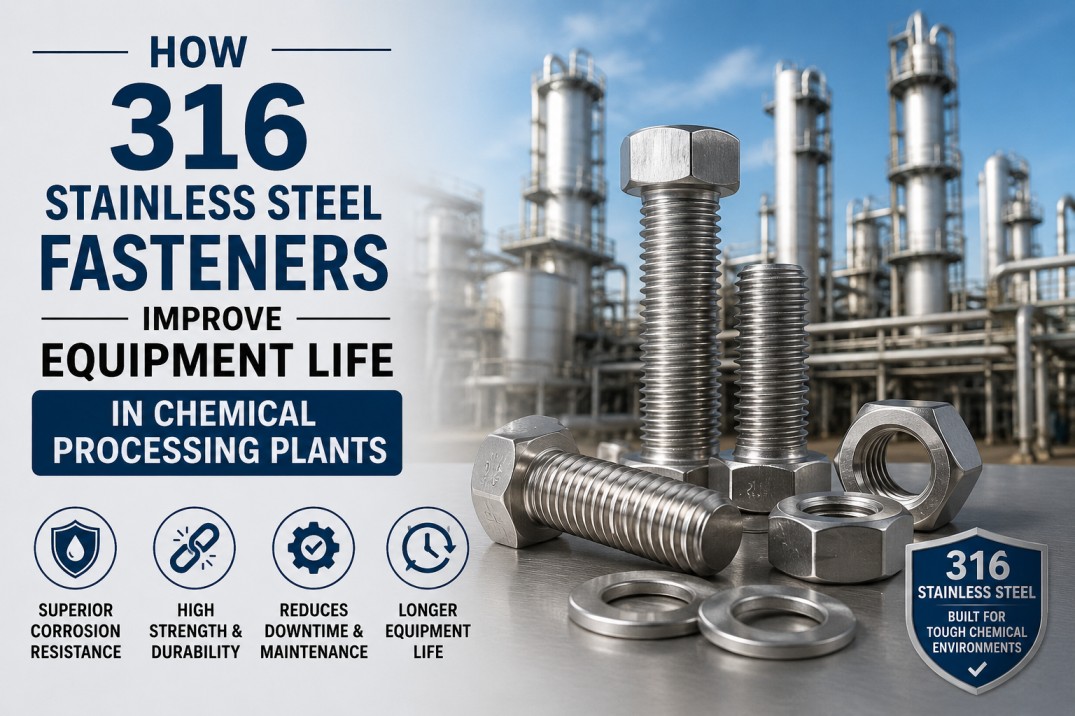
SS 316 Fasteners resist corrosion and maintain joint integrity under demanding chemical-processing conditions, helping extend the service life of the equipment they hold together. Their resistance to chloride-induced corrosion, combined with good mechanical performance, makes them suitable for fastening applications where lower-alloy materials may deteriorate prematurely.
What Are 316 Stainless Steel Fasteners?
316 is a grade of austenitic stainless steel. It has molybdenum as an extra element, which can prevent the chlorides and industrial strong chemicals from readily pitting or corroding the traditional fasteners (unlike 304). These bolts, nuts, studs, screws and washers are produced by manufacturers utilizing typical cold heading and precision machining methods. ASTM and ISO norms, which are international standards, strictly define chemical and mechanical qualities. These stringent requirements are to ensure that you get genuine 316 grade fasteners, not lower-grade knockoffs.
Why 316 Stainless Steel Is Ideal for Chemical Processing Plants
The advantage of 316 in this business is its excellent corrosion resistance, especially to chloride elements. It also holds high strength and excellent oxidation resistance when exposed to heat for a long duration. Good weldability means easy manufacturing, and a long service life and low maintenance needs cut the total cost of ownership. The grade is suitable for industrial applications where cleanliness is required, providing reliable performance in demanding conditions that would otherwise degrade carbon steel or even 304 in a much shorter time span.
How 316 Stainless Steel Fasteners Improve Equipment Life
Prevent Corrosion-Related Failures
Corrosion resistant fasteners protect against rust, pitting, and crevice corrosion, therefore safeguarding the equipment they fasten from the kind of slow deterioration that eventually leads to an unscheduled shutdown.
Increase Equipment Reliability
This is a secure fastening that is corrosion-resistant, so it will not loosen or leak. The sudden failure that occurs when a joint silently fails over time.
Reduce Maintenance Costs
Lower maintenance spend over the working life of a facility, with less unscheduled downtime and fewer replacements.
Withstand Harsh Chemical Environments
316 fasteners hold up against acids, alkalis, chlorides, solvents, moisture, and steam, the exact combination of exposures a chemical plant throws at its hardware daily.
Improve Safety
Reliable fastening keeps pressure vessels, piping systems, storage tanks, and processing equipment secured as designed, which matters directly to plant safety, not just equipment uptime.
Common Applications in Chemical Processing Plants
Molybdenum boosts corrosion resistance of SS 316 stainless steel fasteners in chloride and marine atmospheres.
- Marine equipment: Saline water attacks on ships, docks, and offshore rigs cause severe corrosion, pitting, and cracking.
- Chemical Processing: Chemical Processing Fasteners are used on pipes, reaction tanks, pumps and other plant equipment where corrosion resistance is required in demanding process environments.
- Pharmaceutical Manufacturing: Joints are clean and free of contaminants. Resistant to rigorous chemical sterilizing treatments.
- Food and Beverage: It can be processed with high hygienic standards to avoid the leaching of metals into sour or salty foods.
- Petrochemical: It is capable of handling high pressure, high temperature, and corrosive hydrocarbon conditions in petrochemical and refining industries.
- Coastal infrastructure: Prevents rust and disintegration of coastal bridges, walkways and architectural projects.
- Fasteners for medical equipment and gadgets: Surgical tools and medical gear require fasteners that are highly corrosion-resistant and biocompatible.
Types of 316 Stainless Steel Fasteners
The range covers 316 Stainless Steel Bolts, hex bolts, stud bolts, threaded rods, screws, nuts, washers, socket head cap screws, anchor bolts, and U-bolts, with custom fasteners available where a project’s design doesn’t match standard stock.
Standards and Specifications
ASTM A193 Grade B8M and ASTM A194 Grade 8M cover bolting and nuts respectively for high-temperature and high-pressure service, while ASTM F593 and F594 address general-purpose stainless fasteners. ISO, DIN, and ASME specifications apply depending on the project’s governing code and region.
316 Stainless Steel Fasteners vs Other Fastener Materials
| Factor | SS 316 | SS 304 | Carbon Steel | Alloy Steel | Duplex Stainless |
| Corrosion Resistance | Excellent | Good | Poor | Moderate | Excellent |
| Chloride Resistance | Excellent | Moderate | Poor | Poor | Excellent |
| Strength | High | High | Moderate | High | Very High |
| Cost | Moderate-High | Moderate | Low | Moderate | High |
| Maintenance | Low | Low | High | Moderate | Low |
| Service Life | Long | Moderate-Long | Short | Moderate | Very Long |
| Chemical Compatibility | Excellent | Good | Poor | Limited | Excellent |
Factors to Consider Before Selecting 316 Stainless Steel Fasteners
Chemical exposure and temperature range shape material selection before anything else, followed by pressure conditions and correct fastener sizing. Thread type, load requirements, and applicable standards need confirmation alongside surface finish and certification requirements specific to the project’s compliance needs.
Common Mistakes to Avoid
The most costly mistakes are actually the usage of carbon steel in corrosive environments and the selection of the inappropriate fastener grade for the actual chemical exposure encountered. These recurring problems often occur in chemical plant maintenance records: not following ASTM specifications, installing with the wrong torque, mixing incompatible metals, buying uncertified fasteners, and not doing routine inspections.
Choosing a Reliable 316 Stainless Steel Fasteners Supplier
Those who buy from an ISO-certified producer that provides Mill Test Certificates and PMI testing can be assured that the material they are buying can be traced back to the original source. In addition to quality control, third-party certifications, global export capability, and huge inventory, a reliable 316 Stainless Steel Fasteners Supplier will offer specialized production, technical support and secure packaging. These are attributes required for factories that cannot afford long lead times.
Conclusion
316 stainless steel fasteners are used in chemical processing plants to prolong the life of equipment by avoiding corrosion, maintaining the integrity of joints, and limiting the amount of maintenance required when compared to other types of fasteners. More importantly, it is to turn that material advantage into long-term performance, increased safety, and reduced lifetime costs. It is crucial to purchase certified fasteners from a trusted provider such as Sumit Impex.
