

Commercial Moving Boxes: How Australian Businesses Can Procure, Pack, and Protect Like a Professional
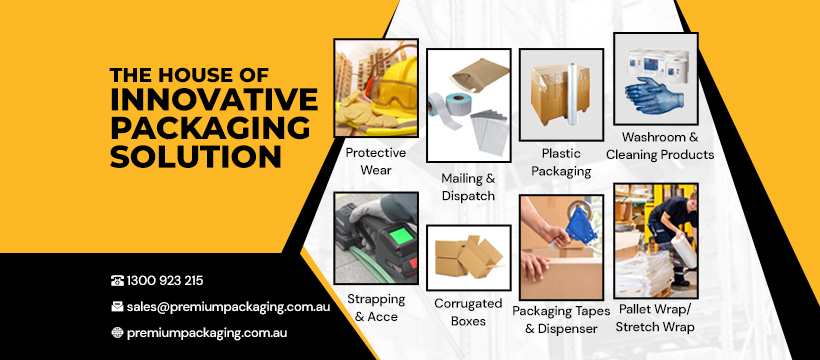
When a business relocates, restructures its warehousing, or moves product between sites, the quality of the moving boxes used throughout that transition has a direct bearing on what arrives intact, how fast the job runs, and what the whole operation costs. For procurement managers, operations supervisors, and removalist operators sourcing packaging at volume, choosing the right commercial carton is not a minor detail. It is a decision that affects damage rates, staff handling efficiency, transport economics, and the professional standard of every job that goes through your operation.
This guide covers what commercial buyers need to understand when selecting moving boxes for business use, from structural specifications and carton types through to complementary packaging products, sustainability considerations, and the practical advantages of bulk procurement. It is written for the people responsible for getting these decisions right: facilities teams overseeing corporate relocations, removalist business owners managing weekly supply, warehouse operators rotating inventory between sites, and procurement managers consolidating their packaging supplier base.
What Separates a Commercial-Grade Moving Box from a Standard Carton
Not all corrugated cardboard cartons perform the same way under commercial conditions. A moving box built for business use differs from a general stock carton in several measurable ways, and understanding those differences is the starting point for making a sound purchasing decision.
Board Grade and Wall Construction
Commercial moving cartons are typically manufactured from double-wall or triple-wall corrugated cardboard. The additional fluting layer increases compressive strength, which matters when cartons are stacked on pallets, loaded into removal vehicles, or stored in a warehouse during a staged relocation. A single-wall carton may perform adequately for a single courier shipment, but under the stacking pressure of a fully loaded removals truck or a multi-floor office clearance, the structural difference becomes significant and the consequences of failure are measurable in damaged goods and rework costs.
Base Construction
Well-manufactured commercial moving boxes use a full-overlap base design, which distributes load weight more evenly across the base flaps and prevents bowing or splitting when the carton is packed with dense items such as archived documents, IT equipment, or trade stock. This is a detail that matters far less for light eCommerce shipments but becomes critical when your team is loading heavy cartons onto trolleys and into vehicles across a full working day.
Dimensional Accuracy
Standardised dimensions across a bulk order enable consistent vehicle loading, predictable stack heights, and reliable fit on warehouse shelving. When a business sources moving cartons from multiple suppliers or ad hoc retail sources, the dimensional variation creates loading inefficiencies and reduces the density of usable space in vehicles and storage areas. Consistent carton sizing is one of the practical advantages of sourcing through a wholesale supplier rather than picking up boxes wherever they happen to be available.
Sourcing commercial moving cartons from a single wholesale supplier ensures consistent board grade, dimensions, and structural performance across every job. It removes the guesswork from operational planning and reduces the risk of unexpected carton failures mid-move.
Key Moving Box Types for Commercial Operations
Australian businesses operating across removals, warehousing, retail, hospitality, and corporate facilities management typically source a combination of carton types depending on what is being moved and how it is being transported.
| Box Type | Best Load | Load Density | Best For |
|---|---|---|---|
| Tea Chest | Linen, clothing, general office items | Light to medium | Removalists, office relocations |
| Book / Archive Carton | Files, printed stock, dense items | Heavy | Offices, warehouses, archivists |
| Port-a-Robe Carton | Hanging garments, uniforms | Light | Hospitality, fashion retail, corporates |
| Picture / Frame Carton | Artwork, mirrors, flat-screens | Light to medium | Galleries, offices, AV fit-outs |
| Heavy Duty Double-Wall | Tools, equipment, dense product | Heavy | Warehouse transfers, manufacturing |
Tea Chest Cartons
The tea chest is the standard workhorse of the Australian removals industry. Its larger cubic volume suits general commercial goods including linen, clothing, kitchenware, and lightweight bulky items. The tall profile loads efficiently into removal vehicles and stacks consistently in storage facilities. For removalist businesses running multiple jobs per week, tea chest cartons in bulk supply represent a core product line that needs to be available in consistent quantity and quality.
Book and Archive Cartons
Book cartons are smaller and built for denser loads. For businesses moving archived files, printed materials, trade catalogues, legal records, or similar heavy stock, the compact dimensions of a book carton reduce the risk of overloading and provide better base integrity. They handle well on hand trolleys and fit neatly onto standard shelving during temporary storage. For corporate offices, law firms, accounting practices, and any business managing document-heavy relocations, book cartons are an operational necessity rather than an optional format.
Port-a-Robe Cartons
Port-a-robe cartons are purpose-built for garment transport. These tall cartons incorporate a hanging rail so that clothing transfers directly from wardrobe to carton without folding or repacking. For the hospitality sector, fashion retailers, and corporate operations managing wardrobe assets during fit-outs or premises changes, port-a-robe cartons protect garment presentation and cut down significantly on the labour involved in repacking on arrival.
Picture and Frame Cartons
Picture cartons provide a structured solution for flat artwork, framed documents, certificates, mirrors, and screen equipment. The double-wall construction and deep format protect fragile flat items that would be at risk in a standard carton. For galleries, corporate offices with artwork collections, and AV installation teams managing display equipment, these cartons are the appropriate commercial solution.
Heavy-Duty Double-Wall Cartons
For dense or heavy loads including tools, trade equipment, and manufactured product, heavy-duty double-wall cartons provide the base integrity and compressive strength required to handle weight without failure. These are the appropriate choice for warehouse-to-warehouse transfers, manufacturing facility moves, and any application where the load per carton exceeds what a standard commercial carton is designed to carry.
Complementary Products That Complete the Commercial Moving Kit
Sourcing moving boxes as part of a complete commercial packing kit reduces the number of suppliers your procurement team manages and ensures that every product used across a job meets the same quality standard.
Bubble Wrap Bubble wrap is one of the most consistently required products alongside moving cartons. For fragile stock, glassware, ceramics, electronic equipment, and medical devices, bubble wrap provides the impact cushioning that corrugated cardboard alone cannot deliver. Premium Packaging supplies bubble wrap across a range of widths and roll lengths suited to commercial quantities, including anti-static options for sensitive IT hardware and foil-laminated varieties for temperature-sensitive items.
Packaging Tape and Dispensers Under-sealing a loaded carton is one of the most common causes of box failure during transit. High-tack packaging tape applied correctly to both the base and the lid of a loaded carton significantly reduces the risk of spillage, product damage, and liability claims. Premium Packaging stocks packaging tape in commercial roll formats alongside tape dispensers built for operational throughput.
Mattress and Furniture Bags For furniture, large format items, and upholstered surfaces, mattress and furniture bags from Premium Packaging’s plastic packaging range protect against dust, moisture, and surface damage during transport and storage. These are particularly relevant for removalist operators, hospitality fit-out teams, and facilities managers overseeing office premises changes.
Stretch Wrap and Pallet Wrap For palletised loads, Premium Packaging’s stretch film range secures cartons and product onto pallets, reduces shifting during transit, and provides an additional layer of dust and moisture protection. For warehouse transfers and commercial relocations that involve palletised stock, pallet wrap pairs directly with bulk moving carton procurement.
Kraft Paper Rolls Kraft paper rolls provide a versatile protective wrapping material for items that benefit from surface protection but do not require full bubble wrap cushioning. For kitchenware, ceramics, books, and general commercial goods, kraft paper offers a practical and recyclable void-fill and wrapping solution.
Sustainability in Commercial Moving Packaging
The shift toward environmentally responsible packaging is now a practical requirement for many commercial operators. Government procurement guidelines, corporate sustainability targets, and client expectations across sectors including retail, hospitality, and professional services are all driving demand for packaging materials that align with recycling and waste reduction goals.
Corrugated cardboard moving boxes have a strong environmental profile. They are manufactured from a significant proportion of recycled fibre and are fully recyclable through commercial cardboard recycling streams after use. For businesses that generate substantial volumes of cardboard waste after a relocation or fit-out, the recyclability of corrugated cartons is a tangible benefit in both waste management cost and sustainability reporting.
Premium Packaging supplies eco-friendly packaging solutions across its product range. For businesses with formal sustainability obligations or supply chain codes of conduct, consolidating packaging procurement through a supplier with a clear environmental commitment simplifies both purchasing and reporting.
Corrugated cardboard cartons are made from a high proportion of recycled fibre and are fully recyclable after use. Choosing commercial moving boxes from a responsible wholesale supplier supports both operational sustainability targets and waste management cost reduction.
The Case for Bulk Procurement in Commercial Moving Packaging
The economics of packaging procurement change considerably at volume. Purchasing moving boxes as a one-off requirement from a retail or trade hardware supplier costs substantially more per unit than sourcing through a wholesale packaging partner with commercial pricing structures.
Beyond unit cost, bulk procurement delivers three practical operational benefits:
- Supply continuity: Operational delays caused by carton shortages on a removal job, a warehouse clearance, or a staged office relocation carry a direct cost in staff time and client satisfaction. A bulk supply arrangement removes that risk from your planning.
- Loading efficiency: When all cartons in a consignment are the same size, stacking in vehicles and storage areas is faster and more predictable. Standardised bulk orders solve dimensional variation at the procurement stage.
- Performance consistency: A consistent supply relationship means that board grade, base integrity, and dimensional accuracy are predictable across every order. Your team can set operational standards based on known carton performance rather than testing each new batch.
For removalist companies running multiple jobs per week, facilities teams managing a scheduled office fitout, and warehouse operators relocating inventory across sites over several months, a structured bulk supply arrangement with Premium Packaging reduces procurement effort, improves operational predictability, and delivers commercial packaging that performs consistently across every job.
How to Choose the Right Moving Boxes for Your Business
The right commercial moving carton depends on what you are packing, how it is being transported, and how it will be stored. Procurement teams and operations managers who specify carton types by load category rather than applying a single standard size across every job consistently achieve lower product damage rates and better staff handling outcomes.
A practical starting point is to categorise the items being moved into three groups: heavy and dense (files, books, equipment), light and bulky (linen, clothing, general office items), and fragile or specialist (glassware, artwork, hanging garments). Each group maps to a different carton type, and ordering the right proportion of each reduces both damage rates and carton waste from over-specification.
For businesses new to procuring commercial moving packaging at scale, or that want to review their current carton specification, the team at Premium Packaging provides practical product guidance as part of its service to commercial buyers. With experience supplying removalist companies, logistics operators, retail chains, hospitality groups, and corporate facilities teams across Australia, Premium Packaging can assist with quantity estimation, carton type selection, and complementary product recommendations tailored to your operation.
Source Your Commercial Moving Boxes Through Premium Packaging
Premium Packaging is a Sydney-based wholesale packaging supplier delivering commercial-grade moving boxes, bubble wrap, packaging tape, stretch film, and complementary packaging products to businesses across Australia.
Phone: 1300 923 215 Email: admin@premiumpackaging.com.au Website: premiumpackaging.com.au Address: Unit 7/561 Great Western Highway, Werrington NSW 2747
Frequently Asked Questions
Q1. What is the structural difference between a tea chest carton and a book carton for commercial use?
A tea chest carton has a larger cubic volume and suits bulky, lightweight loads such as linen, general office contents, and clothing. A book carton is smaller and built to handle denser, heavier loads such as archived files, printed materials, and trade catalogues. Specifying the correct carton type for each load category reduces damage rates and improves handling safety for the team on the job.
Q2. How should a procurement team estimate the number of moving boxes needed for a commercial office relocation?
A practical approach is to estimate carton requirements by workstation count, filing cabinet volume, and category of loose items such as kitchenware, IT equipment, and printed materials. Operations teams with experience in commercial relocations typically work from a formula based on floor area and staff density. The team at Premium Packaging can assist with quantity estimation for planned relocations based on the scope of the job.
Q3. Can removalist businesses set up an ongoing bulk supply arrangement through Premium Packaging?
Yes. Premium Packaging supports bulk procurement customers with ongoing supply arrangements suited to the regular operational requirements of removalist companies, facilities management operators, and warehouse teams. Volume ordering provides consistent carton quality and pricing, with Australia-wide delivery to match operational schedules across multiple sites or job locations.
Q4. What complementary packaging products should a commercial operator source alongside moving cartons?
A commercially complete relocation kit typically includes packaging tape with dispensers, bubble wrap for fragile items, kraft paper rolls for general wrapping, mattress and furniture bags for soft furnishings and large items, and pallet wrap or stretch film for palletised loads. Sourcing all of these through Premium Packaging consolidates procurement into a single supplier relationship and ensures consistent product quality across every component of the job.
Q5. Are the commercial moving boxes supplied by Premium Packaging recyclable?
Yes. All corrugated cardboard moving boxes in the Premium Packaging range are recyclable through standard commercial cardboard recycling streams. This supports businesses with sustainability reporting obligations, green procurement policies, and waste reduction targets. The recyclability of corrugated cartons is a straightforward sustainability benefit that procurement teams can include in supply chain reporting and client communications without additional qualification.
