

Carrot Prices Hit Record Highs in 2026: What’s Driving It
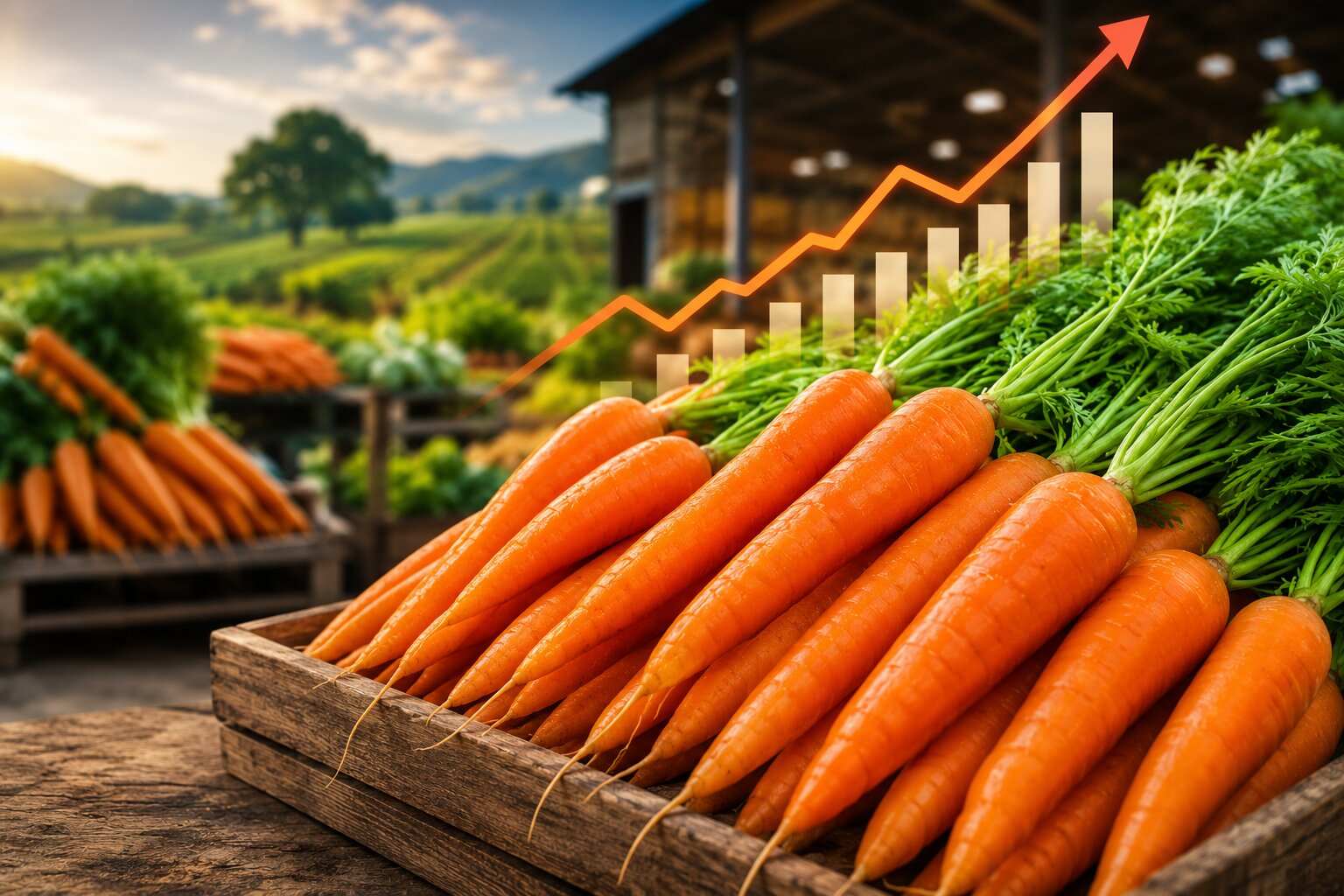
You don’t see carrots in the headlines much, but 2026 broke that pattern. Farm prices climbed to record levels this year, supply has been jumpier than normal in several regions, and the export numbers don’t line up into one clean story. If you grow carrots for a living, buy them wholesale, or just noticed your grocery bill creeping up, there’s an actual reason for it. Let’s walk through what’s going on.
Where U.S. Carrot Prices Stand Right Now
Retail carrots were going for close to $2.28 a kilogram back in June 2026, about a dollar a pound. Ask someone else and you might get a slightly different figure, since it moves around week to week, but that’s roughly the ballpark everyone’s working from. Wholesale is another story altogether — prices bounced between $1.32 and $2.79 per kilogram over the last month, and no two cities seemed to agree. Chicago quoted one number, Atlanta another, and by the time you added freight costs and local supply into Los Angeles or Detroit’s figures, the gap only widened.
There’s a number sitting further up the chain that made me stop and reread it twice. The U.S. Bureau of Labor Statistics has kept a Producer Price Index for farm-level carrots going since 1947, and this past February, that index climbed to its highest mark ever recorded. Eighty years of history, and this is where the line sits now. Growers are, at least on paper, getting paid more for their crop than almost ever before.
Outside U.S. borders, comparisons get murkier fast. Farmgate prices in Ecuador and the Netherlands stay fairly low. India and the U.S. barely line up on wholesale numbers, and honestly that’s not surprising once you factor in labor costs, fuel, and how far a truck has to travel before the carrots even reach a buyer.
Behind the Price Jump
Talk to five different people about why carrot prices climbed and you’ll walk away with five overlapping answers, and none of them wrong exactly. Fuel costs more. Fertilizer costs more. Labor costs more. Growers have had to price their crop just to break even, and that alone covers a good chunk of the record producer price index.
Then weather muddies things further. Soil conditions and moisture timing matter a lot for this crop, more than most, and a single bad stretch during planting or harvest can dry up a region’s supply for weeks. There’s no real way to plan around it, farmers just work through it once it happens.
Demand hasn’t given anyone much of a break either. Baby carrots and ready-to-eat formats keep selling, and nutrition research keeps handing shoppers a reason to buy despite the higher price tag. Trade policy adds one more layer, and it’s a bigger deal here than in a lot of other produce markets since so much U.S. carrot trade runs through Canada and Mexico. Tariffs shift, exchange rates move, logistics costs creep up — none of it stays contained to the border, it all eventually lands on the shelf price.
Trade and Export Trends Worth Watching
1.1 million tonnes, give or take. That’s what U.S. carrot production landed at in 2024, the last full year we have complete numbers for, good for sixth place worldwide. And yet that total actually fell from the year before. Strange thing is, the U.S. still held onto third place globally as a carrot exporter by value during the same stretch. Fewer carrots in the ground, apparently, doesn’t mean fewer carrots leaving the country.
$143.5 million is what those exports were worth in 2024, about 10% higher than the prior year and close to 8% of everything traded globally. Not a small number by any measure. Export prices for American carrots and turnips came in around $1,401 a ton, a figure that’s crept up steadily for well over a decade now. Compare that to import prices, sitting closer to $669 a ton, though those have actually risen faster in percentage terms recently. My guess is American carrots have built up a reputation abroad, years of reliable shipping and long-standing ties with Canada and Mexico probably explain most of that gap.
Why Regional Supply Keeps Swinging
Things outside North America have been far from calm. Some exporting countries watched their shipments jump more than 50% year over year. Others saw the opposite, dropping nearly as much. Part of that comes down to weather, sure, but planting decisions made months in advance matter just as much, and currency swings can make one country’s carrots look cheap overnight, or suddenly out of reach, to whoever’s buying abroad.
There’s also a shift happening at the retail counter. With more consumers reaching for heirloom, coloured, and specialty carrots, this upward sales trajectory appears poised to continue. That’s a significant trend for growers who plan to seed their fields for the upcoming season; there’s a growing sense that having the most distinctive carrots on the shelves can be just as important as growing the most carrots.
Looking Ahead for Growers and Buyers
All signs point towards the rest of 2026 seeing high prices as well, although the incline should temper somewhat once production is able to finally get to where the demand currently is. Zoom out further and the broader U.S. carrot and root vegetable market looks like it’s headed for slow, steady growth, nothing headline-worthy, just a market that keeps inching forward year after year.
If you’re growing carrots, efficiency and differentiation matter more now than they did a couple years back. Buyers and processors have it a bit easier, honestly, mostly just staying flexible on where they source from and paying attention to regional pricing swings, since wholesale hubs and export markets pulled further apart this year than usual. If you want a better sense of how quality standards tie into wholesale pricing, the USDA put out some recent updates to carrot grading standards that are worth a look.
Wrapping Up
Cut through the noise and what’s happening to carrots in 2026 isn’t all that different from what’s happening across agriculture generally right now. Input costs went up, regional supply got choppier, demand stuck around anyway, and export ties kept strengthening. Whatever side of this you’re on, deciding what to plant, running wholesale inventory, or just picking the right time to buy, keeping an eye on both farm-level and retail-level signals is going to matter more this year than it usually does.
If you want to dig further into historical and forecasted carrot price trends, cost structures, and regional comparisons, there’s a fuller breakdown available there.
FAQs
What caused carrot prices to skyrocket in 2026?
Many elements converged: Increased costs for everything from fuel and fertilizer to labour; fickle weather patterns affecting planting and harvest; robust and unwavering consumer demand; trade agreements inextricably linking the carrot industry to our neighbours to the north and south; and more. There wasn’t one definitive cause.
Will car price continue going up the rest of 2026?
Currently, prices are still high, with a slowdown anticipated throughout the rest of the year, allowing production to catch up to demand.
Which country produces the most carrots for export?
U.S. Ranks third globally by value this year, despite a drop in production in 2024.
Why is the price of wholesale carrots different from city to city?
You’re looking at a combo of factors: cost of transport to different locations, supply in local regions, demand in local regions, which explain how a city like Detroit or Chicago or Atlanta or Los Angeles all can show different wholesale pricing one week to the next.
Will the regional price differences go away in the coming months?
No, probably not. Supply imbalances have resulted in widespread prices across city and region, and that’s unlikely to abate soon.
What do these trends suggest growers should focus on?
In the future, growers may need to emphasize not just total volume, but efficiencies and uniqueness with a focus on more niche, coloured, or specialty varieties appealing to consumers.
