

How Long Does SBA Loan Approval Really Take? The Timeline Nobody Warns You About
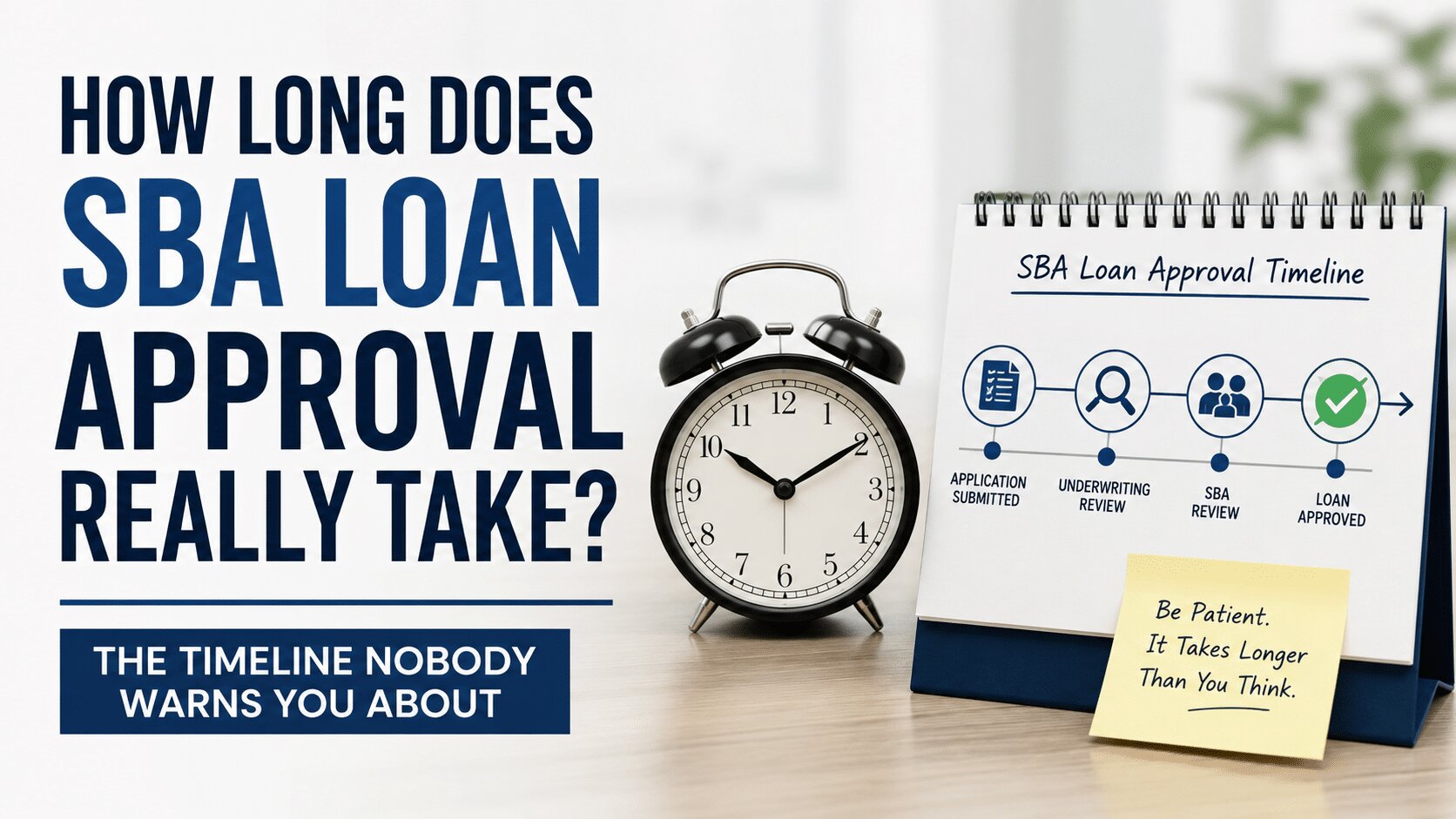
If you’ve Googled this question at midnight while staring at a purchase agreement deadline, I get it. You want a straight answer, not a run-around. So here it is: a typical SBA acquisition loan takes anywhere from 60 to 120 days from application to funding, though I’ve personally seen deals close in as little as 45 days and others limp along for nearly six months. There’s no single “average” that applies to every buyer and honestly anyone who tells you otherwise hasn’t spent much time in the trenches of SBA lending.
In my experience working alongside buyers chasing acquisition financing the timeline question is almost never really about the SBA itself. It’s about how prepared the borrower is, how clean the target business’s books are and whether the lender assigned to your file actually specializes in SBA 7(a) business acquisition loans or is just dabbling in them. Those three variables swing the calendar more than any government processing rule ever will.
Average SBA Loan Approval Times by Loan Program
Not all SBA loans move at the same speed. The program you choose changes the math significantly.
SBA 7(a) is the workhorse for business acquisition financing in USA transactions, and it’s also the most document-heavy. Expect 60 to 90 days on a straightforward deal, and up to 120 days if there’s real estate involved, multiple owners, or a franchise agreement that needs lender review.
SBA Express loans move faster because the SBA guarantees a quicker turnaround on its own review — often 36 hours for the SBA’s part. But don’t get too excited. The lender’s underwriting still takes weeks, so total time is usually 30 to 60 days and loan amounts are capped lower than standard 7(a) financing, which limits how useful Express is for most acquisitions.
SBA 504 loans are built for major fixed-asset purchases like real estate or heavy equipment, not general acquisition capital, and they typically run 60 to 90 days because two lenders (a bank and a Certified Development Company) are coordinating instead of one.
SBA Microloans are the quickest of the bunch, sometimes closing in 30 to 45 days, but the loan ceiling — usually under $50,000 — makes them impractical for buying an existing business.
Summary of Available SBA Loan Programs
Quick rundown before we go further, because I know not everyone reading this has spent years buried in SBA paperwork like I have.
- SBA 7(a) — the go-to for sba business acquisition loans, flexible use of funds, loan amounts up to $5 million
- SBA Express — faster initial review, smaller loan caps, good for smaller working capital needs
- SBA 504 — real estate and equipment focused, requires a down payment as low as 10% in many cases
- SBA Microloan — small dollar amounts, nonprofit intermediary lenders, rarely used for full acquisitions
If you’re buying a business 90% of the time you’ll land on the 7(a) program. It’s simply the only one flexible enough to cover goodwill, working capital, inventory and equipment all in one loan.
Step-by-Step SBA Loan Approval Process
Here’s where things get real. The process isn’t one big leap it’s a series of smaller stages and each one has its own bottlenecks.
Eligibility Check. Before anything else, your lender confirms you and the target business qualify. This means reviewing your credit, industry type, and the seller’s financials. I’ve seen buyers lose weeks here simply because nobody checked eligibility before falling in love with a deal.
Application Submission. You’ll submit personal financial statements, three years of business tax returns, a business plan, and often a letter of intent on the acquisition. Missing documents are the single biggest reason this stage drags.
Pre-Approval. The lender issues a conditional commitment based on your submitted docs. It’s not a done deal, but it’s a green light to keep moving forward with confidence.
Underwriting. This is the meat of the process. Underwriters dig into cash flow, debt service coverage ratios, collateral, and the seller’s historical financials. Expect back-and-forth requests for clarification, this is normal not a red flag.
SBA Authorization. Once your lender’s underwriting is complete, the file goes to the SBA (or is processed under delegated authority if your lender is a Preferred Lender). This step can be nearly instant or take several weeks depending on lender type.
Closing & Funding. Final paperwork, loan agreements, and disbursement. This is also when title work, lien searches and any remaining conditions get cleared.
How Long Does Each Stage of the SBA Loan Process Take?
To give you real numbers instead of vague ranges, here’s roughly how the timeline breaks down on a typical sba acquisition loan:
Eligibility check and initial review generally takes 3 to 7 days. Application submission and document gathering the stage most buyers underestimate often eats up 1 to 3 weeks, especially if tax returns or seller financials need chasing down. Pre-approval usually follows within a week of a complete application. Underwriting is the longest stretch, typically 3 to 6 weeks, and it’s where most delays happen. SBA authorization can be as fast as 1 to 5 business days for Preferred Lenders, or 2 to 4 weeks for lenders without delegated authority. Closing and funding, once everything’s approved, generally wraps up in 1 to 2 weeks.
Add it up, and you’re looking at that 60-to-120-day range I mentioned earlier but every stage has room to stretch or shrink based on how organized everyone involved is.
Factors That Can Delay SBA Loan Approval
I’ve watched deals stall for reasons that had nothing to do with the buyer’s qualifications. A seller who’s slow to hand over financials. A business valuation that comes in lower than the purchase price, triggering a renegotiation. Environmental reports on commercial real estate that take weeks to schedule. Franchise agreements that need SBA-specific addenda before they’re approved.
Credit issues matter too, obviously, but they’re rarely the surprise factor. The real surprise, more often than not, is how much the seller’s cooperation or lack of it controls your timeline. You can have a perfect buyer profile and still wait an extra month because the seller’s bookkeeper is on vacation.
How to Speed Up Your SBA Loan Approval
There are things within your control here, and they matter more than people realize. Get your personal financial statement and tax returns organized before you even start shopping for a business. Don’t wait until you’re under contract. Work with a lender that specializes specifically in acquisition financing rather than a generalist bank; specialization shows up in turnaround time. Push your seller early for clean, organized financials, ideally reviewed or audited statements rather than a shoebox of receipts. And this one’s underrated: respond to underwriter requests within 24 hours instead of letting emails sit. Underwriting is often paused waiting on the borrower, not the bank.
An SBA loan broker is your guide, strategist, and advocate who helps you to secure an SBA loan to buy a business and in my experience, having that kind of advocate in your corner shaves real weeks off the process because they know exactly which lenders move fast for your specific deal type.
Common Reasons SBA Loans Get Delayed or Denied
Weak debt service coverage ratio tops the list lenders want to see the business can comfortably cover the new loan payment plus existing debt. Incomplete or inconsistent seller financials come in a close second; if the tax returns don’t match the P&L the seller handed you, expect questions. Insufficient collateral, unresolved legal or tax liens, and a buyer’s lack of relevant industry experience also show up frequently as sticking points. None of these are automatic deal-killers, but they all add time while the lender works through mitigating factors.
What Happens After SBA Loan Approval?
Approval isn’t the finish line, and I think buyers sometimes celebrate a bit early here. After approval, you’re moving into closing conditions, final title work, insurance binders, UCC filings, and sometimes a final site visit. Your attorney and the lender’s closing team coordinate the paperwork, and funds are typically wired directly to escrow or the seller at closing. From SBA authorization to actual funding, most deals take another 2 to 4 weeks, so budget for that even after you get the good news.
Tips to Avoid Delays in the SBA Loan Process
A few things I always tell buyers, based on what I’ve seen go sideways more than once: don’t switch lenders mid-process unless something’s genuinely wrong, because you’ll restart much of underwriting from scratch. Keep your seller engaged and informed about what documents are coming, surprise requests three weeks in tend to cause friction. Avoid making large, unexplained deposits or withdrawals from your accounts during the application window, since underwriters will ask about them. And build a buffer into your purchase agreement’s closing date. A 90-day close clause gives you breathing room that a 45-day clause simply doesn’t.
If you’re comparing lenders or exploring your acquisition capital options, it’s worth reviewing our full guide on SBA business acquisition loans before you commit to a lender or a timeline. For a deeper checklist on getting your documents and financials in order, take a look at our post on Before Applying for an SBA Acquisition Loan guide it walks through exactly what to have ready before you start the clock.
Final Thoughts
There’s no way around it, an SBA 7(a) business acquisition loan takes time and anyone promising a two-week close on a full acquisition is either exaggerating or talking about a very small, very simple deal. But time isn’t the enemy here. Poor preparation is. Get your documents in order, pick a lender who actually knows acquisition financing, and keep your seller in the loop, and you’ll move through this process about as fast as anyone reasonably can.
If you’re ready to explore your financing options or want a second opinion on your timeline, having a trusted partner in your corner is highly recommended reach out at YAW Capital. They work specifically with buyers navigating SBA acquisition loans, and they’re happy to walk you through what your specific deal might realistically look like.
FAQs
How long does it take to get approved for an SBA loan to buy a business?
Most acquisition deals take 60 to 120 days from application to funding, though well-prepared buyers working with an experienced lender sometimes close faster.
Why is my SBA loan taking so long?
Usually it comes down to missing documentation, a seller who’s slow to provide financials, or a lender without dedicated SBA underwriting staff. Ask your lender directly which stage your file is stuck in.
Can I speed up SBA loan approval?
Yes — having your financials ready before applying, choosing a lender experienced in acquisition financing, and responding quickly to underwriter requests all help significantly.
What’s the fastest SBA loan program?
SBA Express offers the quickest initial SBA review, but loan amounts are capped lower, which can make it less practical for a full business purchase.
Does the SBA approve loans directly or does my lender?
Most SBA lenders operate under delegated authority (Preferred Lender Program), meaning they approve the loan themselves without waiting on a separate SBA review, which is part of why lender choice matters so much for speed.
