

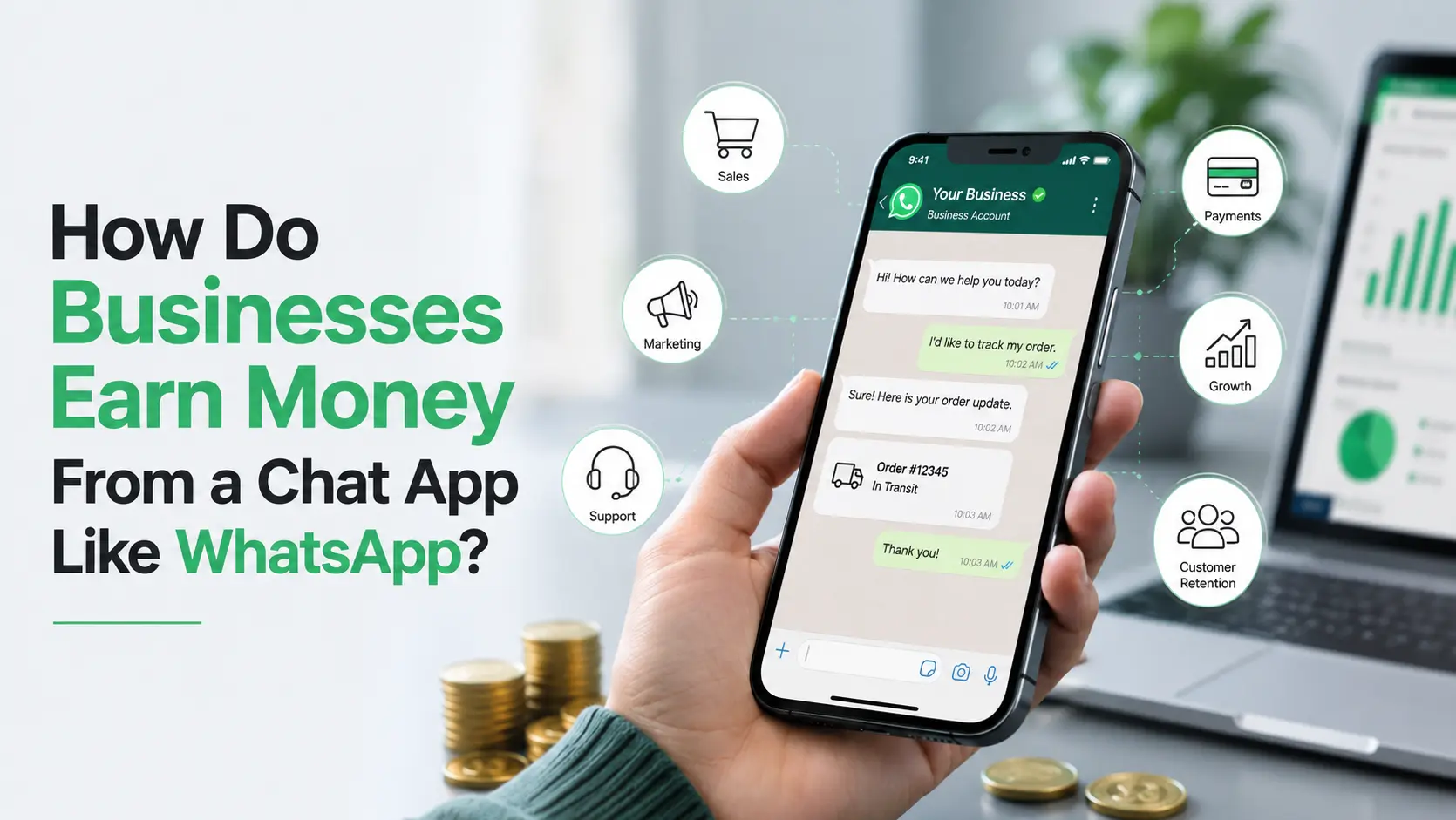
How Do Businesses Earn Money From a Chat App Like WhatsApp?
WhatsApp itself took years to turn a profit, and for a long time it didn’t even try. No ads, no subscriptions, just a small fee some users paid once a year. Then Facebook bought it for $19 billion, and everything about how a chat app makes money changed.
So if messaging apps don’t run on ads the way most free apps do, how does anyone actually make revenue from one? Turns out there are several solid paths, and businesses building their own chat platforms today mix and match them depending on their audience.
Why Chat Apps Are Hard to Monetize (At First)
People expect messaging to be free. Charge a subscription fee upfront, and you’ll lose most of your user base before it even grows. That’s the core problem every chat app founder runs into.
The fix isn’t to charge users directly — it’s to build revenue around the platform instead of on top of it. That’s exactly what companies pursuing WhatsApp clone app development figure out early. The app itself stays free. The money comes from what businesses and advanced users are willing to pay for on top of the free experience.
1. Business Messaging and API Access
This is where the real money sits for WhatsApp, and it’s the model most new chat apps copy first.
Companies want to talk to customers where they already are, and that’s inside a messaging app, not buried in an email inbox. WhatsApp Business API charges companies per conversation, and pricing shifts based on the country and the type of message sent (a support reply costs less than a marketing message, for instance).
A chat app built with this model in mind can charge:
- Per-message or per-conversation fees for businesses
- Monthly platform fees for access to the business API
- Tiered pricing based on message volume
Large enterprises pay well for reliable, high-volume messaging infrastructure, which makes this one of the most stable income streams for any app built through the best WhatsApp clone app development company.
2. In-App Advertising (Carefully Placed)
WhatsApp avoided ads for years because Jan Koum, one of its founders, hated them. But not every chat app has to follow that same rule.
Done right, ads inside a status feed or a discovery tab don’t ruin the experience the way a banner in the middle of a chat thread would. Facebook eventually added ads to WhatsApp Status, and it didn’t cause the mass exodus people expected.
Businesses building a chat application similar to WhatsApp can add:
- Native ads in a Status or Stories-style feature
- Sponsored stickers or GIFs
- Promoted business profiles inside a discovery section
The key rule here: keep ads out of private conversations. Users tolerate ads in shared, public-facing spaces far more than they’ll tolerate them showing up between personal messages.
3. Premium Features and Subscriptions
Not everyone wants a paid tier, but a meaningful chunk of users will pay for extra convenience once they’re already hooked on the free version.
Common premium add-ons include:
- Larger file-sharing limits
- Custom themes and chat wallpapers
- Advanced privacy controls, like hiding read receipts selectively
- Multi-device support without the usual restrictions
- Priority customer support
Telegram runs this model well with Telegram Premium, charging for things like faster downloads and bigger file limits while keeping the core app free. Any team working on a WhatsApp-style messaging app can lift this same playbook — free for everyone, better for people willing to pay a small monthly fee.
4. E-Commerce and In-App Shopping
WhatsApp has quietly become a shopping tool in many countries, especially where small businesses rely on it to sell directly to customers. WhatsApp added product catalogs, in-chat payments, and business profiles specifically because so many sellers were already using the app that way.
A chat platform can build this in from day one instead of bolting it on later:
- Product catalogs businesses can share inside chats
- In-app checkout and payment processing
- A small transaction fee on every sale completed through the platform
This model works especially well in markets where WhatsApp already dominates small business communication, like India, Brazil, and much of Southeast Asia.
5. Data Insights (Handled the Right Way)
This one needs care, since privacy expectations around messaging apps run high. Reading private messages for ad targeting is a fast way to destroy user trust.
That said, businesses can still generate value from aggregated, anonymized data:
- Usage trends sold to market research firms
- Anonymized engagement metrics offered to enterprise clients
- Insights into peak usage times, popular features, and regional adoption
None of this involves reading actual conversations. It’s closer to the kind of analytics dashboards SaaS companies already sell, just built around chat behavior instead of website traffic.
6. White-Label Licensing
Here’s a revenue stream a lot of people overlook: selling the platform itself, not just access to it.
Plenty of companies want their own branded messaging app but have zero interest in building one from scratch. That’s exactly the gap filled by teams offering top On-demand WhatsApp clone application development — pre-built, customizable chat platforms that other businesses can license, rebrand, and launch under their own name.
This model turns one piece of software into multiple income streams:
- A licensing fee for the base platform
- Charges for custom feature development
- Ongoing maintenance and hosting fees
- Charges for white-label branding and setup
It’s one of the fastest ways to earn from chat app technology without needing millions of end users of your own.
7. Payment Processing Fees
Once a chat app supports peer-to-peer payments, transaction fees become an easy add-on. WhatsApp Pay already works this way in markets like India and Brazil, letting users send money directly inside a chat.
Even a small percentage fee on transactions adds up fast once volume increases, especially in markets where mobile payments already dominate over cash or card use.
Picking the Right Mix for Your Chat App
No single model listed above needs to carry the entire business. WhatsApp itself blends business messaging, e-commerce tools, and payment processing rather than relying on just one revenue stream.
Businesses starting fresh usually plan their monetization strategy around three questions:
- Who’s the target audience? Consumers, businesses, or both?
- Where will the app launch first? Markets like India and Brazil favor payments and commerce features; Western markets often respond better to premium subscriptions.
- What long-term value does the platform offer? Messaging alone isn’t enough anymore — most successful apps layer commerce, business tools, or payments on top.
Getting these decisions right early on saves a lot of rework later. That’s why many founders bring in a team that offers best WhatsApp clone app development services — they’ve already built and tested these revenue models across different projects, so they know which features to prioritize and which ones rarely pay off.
Final Thoughts
A chat app can absolutely make money without charging users to send a text. WhatsApp built a multi-billion-dollar business on business messaging, e-commerce tools, and payment processing, not banner ads. Any founder chasing similar success has plenty of proven paths to follow instead of guessing from scratch.
Whether the plan involves business API access, premium subscriptions, white-label licensing, or a mix of everything, the strategy matters more than any single feature. Teams that get this right from day one, often with guidance from experienced WhatsApp clone app development partners, end up with a product that earns revenue steadily instead of scrambling to bolt on monetization after launch.
