

6 Proven Data Storytelling Frameworks for Better Decision-Making
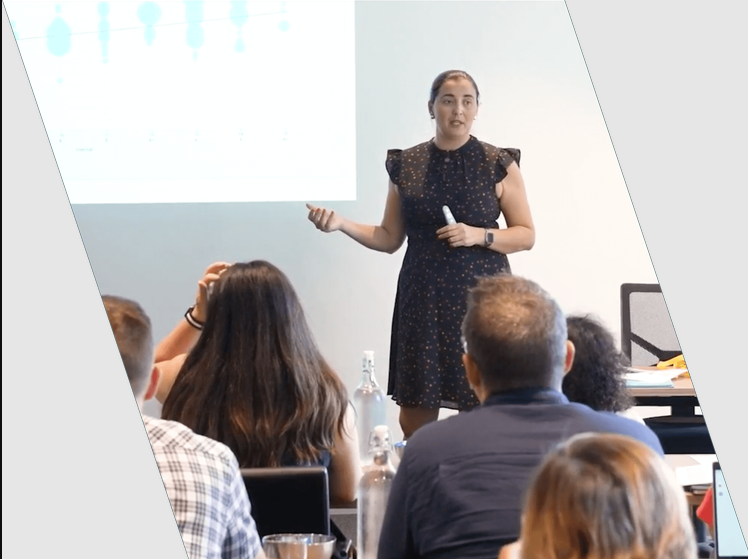
There’s a moment I keep seeing in boardrooms and strategy sessions someone pulls up a dashboard packed with numbers the room goes quiet and then… nothing. No decision gets made. People nod politely and move on. Sound familiar?
That moment is what made me obsessed with storytelling with data. Because the problem isn’t the data. The problem is that raw numbers don’t move people. Stories do.
I once watched a senior analyst present eighteen months of customer data in forty minutes. Nobody acted on it. Two weeks later, a junior team member showed three slides same data, completely reframed and the leadership team made a call within the hour. That gap isn’t about intelligence or seniority. It’s about storytelling. After working across business teams, education settings, and everything in between, I’ve seen this pattern repeat more times than I can count. The six frameworks in this article are the ones that actually close that gap.
1. Best Data Storytelling Techniques That Actually Work
The best data storytelling techniques share one thing in common they put the audience first, not the data. That sounds obvious but its harder than it sounds when you’re deep in spreadsheets and dashboards. One technique I keep coming back to is the “So What?” test. Before presenting any single data point ask: so what does this mean for this audience, right now? If you can’t answer that in one sentence, the insight probably isn’t ready to be shared. This alone wipes out like 40% of the noise in most reports. Something shifted when I started thinking about data presentations the way a screenwriter thinks about structure. Every solid story has a beginning that grounds you ,a middle that creates a bit of tension, and an end that resolves it. Try that with your data. Here’s the context, here’s what the numbers are pointing at as “wrong”, here’s what we should do next, and suddenly something clicks for the audience. There’s actually solid research behind this. A Stanford study found people retain information delivered through story far more effectively than raw facts alone some estimates put it at 22 times more memorable. I can’t argue with that, and honestly, neither can my inbox. After I started framing analysis this way, stakeholders stopped saying “interesting” and started saying “okay, so what do we do next?
Contrast and comparison is another underrated technique. Instead of showing an absolute number (“our conversion rate is 3.2%”) anchor it “our conversion rate is 3.2% which is below the industry average of 5.1% but up from 1.8% just 18 months ago.” Context transforms a data point into a decision-driver.
2. Common Data Storytelling Mistakes and How to Fix Them
The most common data storytelling mistake? Treating data storytelling like it’s about the data. It’s not. It’s about the decision you’re trying to enable. I’ve sat through presentations where an analyst spent 20 minutes on methodology and two minutes on the actual recommendation. That’s backwards.
Another major pitfall is chart overload. Packing twelve visualizations onto one slide doesn’t signal thoroughness it signals a lack of editorial judgment. The fix is simple but uncomfortable: pick your one most important chart and build your narrative around it. Everything else can live in an appendix.
Ignoring emotional resonance is also a big one. Data visualization is often treated as purely rational, but humans aren’t. Choosing a colour that signals urgency or framing a statistic through the lens of a real customer’s experience can be the difference between a report that sits in someone’s inbox and one that changes behaviour. This is especially true in education and training contexts something Selena Fisk’s data storytelling training addresses directly by teaching professionals how to bridge that gap.
Lastly there’s the mistake of presenting data without a clear recommendation. Your audience shouldn’t have to connect the dots themselves. You connected them show them.
3. Best Tools for Data Storytelling in 2026
The tools landscape has shifted a lot. In 2026 the most effective data storytelling setups tend to combine a visualization layer with a narrative layer and increasingly an AI-assist layer for pattern recognition.
Tableau remains one of the most powerful platforms for interactive data visualization, especially for teams that need to present live dashboards to non-technical stakeholders. It’s not cheap but for enterprise teams it’s worth it. Power BI is Microsoft’s answer deeply integrated with the Office ecosystem and increasingly capable, especially after recent AI feature updates.
For leaner teams or educators Flourish is genuinely impressive. It lets you create animated, publication-quality visualizations without needing to write a single line of code. I’ve seen educators use it to make academic data accessible and genuinely engaging for students.
Datawrapper is another tool that deserves more attention than it gets journalists use it extensively and the clarity-first design philosophy translates well into business contexts. And if you’re doing any exploratory data analysis Python with Seaborn or Plotly still gives you the most control over custom visualizations.
The honest truth? The best tool is the one your audience can actually read. If your Plotly chart is perfectly coded, it still means nothing, because your stakeholder can’t interpret it in like 10 seconds, right.
4. Real-World Data Storytelling Examples That Inspire Action
One of the most cited real-world examples is Hans Rosling work with Gapminder. He gathered decades of global health and development information and turned it into moving visualizations that, pretty much genuinely, shifted how people understood poverty and progress. What made it work wasn’t the animation it was his narration. He told you what to look for and why it mattered.
In a business context Airbnb’s data team famously restructured how they communicated product metrics internally. Instead of weekly data dumps they began framing metrics around user journeys and emotional moments host anxiety before a first booking guest excitement before a trip. The result was that product teams started making decisions that actually reflected customer experience not just funnel numbers.
In my experience working with Australian organisations on data analysis courses and training, the examples that resonate most aren’t the flashy ones they’re the ones where someone took a confusing regulatory compliance dataset and simplified it into a single clear chart that a non-specialist could act on. That’s the real win.
The unique insight I’d add here that most articles miss: data storytelling works best when it makes someone feel something before they think something. Emotion opens the door; logic walks through it.
5. Best Data Storytelling Podcasts, Webinars and Books (2026)
If you’re serious about building this skill, there’s no shortage of good resources, though the quality varies enormously. And I’d rather point you toward things that are genuinely useful than pad this out with a list of 20 things nobody’s actually listening to.
On the book side, Cole Nussbaumer Knaflic’s Storytelling with Data remains essential reading, practical, visually clear, and immediately applicable. Alberto Cairo’s The Functional Art goes deeper into the theory of visual communication if you want to understand the why behind design choices. And if you want books written specifically for the context you’re actually working in education, corporate teams, NFPs Dr. Selena Fisk’s books take a refreshingly grounded approach to data storytelling. Rather than treating it as a design exercise, they frame it as a people-first practice. You can browse her titles and bundles at the Selena Fisk shop, where books are available individually or as bundles.
For podcasts, DataFramed by DataCamp covers communication and storytelling alongside technical topics. The PolicyViz Podcast by Jon Schwabish is consistently rigorous, especially for anyone in policy or education. But the one I keep coming back to for genuine practitioner perspective is Make Data Talk Dr. Selena Fisk’s podcast, also available as a weekly LinkedIn newsletter. It covers real-world data challenges with honesty and without the jargon overload you get in a lot of data podcasts. It’s the kind of listen where you finish an episode and immediately think of someone you need to share it with.
Webinars are where things get interesting in 2026. Pre-recorded content has its place, but live sessions with a practitioner who takes questions are a completely different experience. Dr. Selena Fisk has hosted webinars spanning business data storytelling, data use in healthcare, and education settings including a session on using data to understand business performance and another on tracking student wellbeing data. You can catch up on past webinars and find paid replay options in the resource library. Education keynote speakers who work at the intersection of data and communication are increasingly in demand at corporate events, and for good reason. Hearing someone unpack a real dataset in real time is a different kind of learning than any textbook can provide.
6. Data Visualisation Tools Every Business Team Should Try
Beyond the big-name platforms there are a handful of tools that business teams consistently overlook and shouldn’t.
Canva’s data visualization features have grown substantially. For teams that don’t have dedicated analysts Canva allows non-technical staff to create clean branded charts quickly. It’s not powerful by data standards but for a marketing team that needs a visual for a presentation by tomorrow it’s a lifesaver.
Looker Studio (formerly Google Data Studio) is free cloud-based and integrates natively with Google Analytics, Sheets and BigQuery. For small to mid-sized businesses already in the Google ecosystem there’s almost no reason not to use it.
Miro deserves a mention for collaborative data storytelling it’s a whiteboard tool at heart but teams increasingly use it to map data narratives collaboratively before building the final presentation. Getting alignment on the story before you choose the chart is a step most teams skip.
For organizations looking to invest in their teams’ capability here structured data analysis courses in Australia are increasingly including hands-on tool training alongside narrative frameworks because the technical skill and the communication skill need to develop together.
FAQs
What is data storytelling and why does it matter for business decisions?
Data storytelling is the practice of combining data, visuals and narrative to communicate insights in a way that drives action. It matters because decisions aren’t made on data alone they’re made by people, who respond to context, emotion and clarity. When you can translate your analysis into a clear story, you shorten the gap between insight and decision.
Is data storytelling only useful for data analysts?
No. Anyone who presents information to others managers, marketers, educators, founders benefits from it. If you’re trying to influence a decision using data, that’s data storytelling, regardless of your job title.
Can I do data storytelling without advanced technical skills?
Yes. You don’t need to code or build complex models. If you can identify the key insight, frame it clearly, and choose the right visual, you’re already doing it. The tools have become simple enough that the story matters far more than the software.
What are the best ways to get data storytelling training for my team?
The most effective training combines conceptual frameworks with hands-on practice on your team’s actual data. Generic courses have their place but the real shift happens when people apply storytelling techniques to problems they already care about. Selena Fisk’s data storytelling training programs are specifically designed for this building capability that transfers directly into workplace practice.
Do I need to be technical to be good at data storytelling?
No, and this is a misconception worth challenging. Some of the best data storytellers I’ve encountered aren’t coders or statisticians. They’re people who understand their audience, can identify what matters most in a dataset and know how to frame it compellingly. The technical skills help, but they’re not the bottleneck.
What’s one thing beginners always get wrong about data storytelling? They focus on the data before they focus on the decision. Start with: what does my audience need to do differently after seeing this? Work backwards from that, and you’ll build a far more effective story.
Is data visualization the same as data storytelling?
No. Visualization is one piece of it. A chart without context, narrative, or a clear takeaway is just a picture. Storytelling with data wraps the visual in meaning it tells the audience what to look at and why it matters.
Should every business presentation include data?
Not necessarily. Data should support a point, not fill a slide. If the data doesn’t directly strengthen your argument or decision, leave it out. More data doesn’t mean more credibility. clarity does.
Can data storytelling improve team decision-making?
Yes, significantly. When everyone in a meeting is looking at the same clearly framed insight, decisions happen faster and with more confidence. Confusion about what the data means is one of the most common reasons decisions stall.
Conclusion
If theres one thing I hope you take away from this: data storytelling isn’t a soft skill. It’s a strategic capability that directly affects how well your orgnisation makes decisions. The frameworks, tools and techniques here are a starting point but the real shift happens when you commit to building this as an ongoing practice, not a one off exercise. Whether you’re a marketer trying to justify a campaign, an analyst presenting to leadership, or an educator helping students understand complex information the principles are pretty much the same. Find the story in the numbers. Make it human. Then let the data back it up.
For professionals and teams ready to move beyond surface-level data literacy, Dr. Selena Fisk’s offers one of the most grounded, practice-focused approaches to building genuine capability in storytelling with data. Whether you’re leading an organization, working in education or advising at the executive level, her frameworks are built for the real decisions real teams face, not hypothetical case studies.
