

How Pressure Ratings Influence Copper Fitting Design and Manufacturing
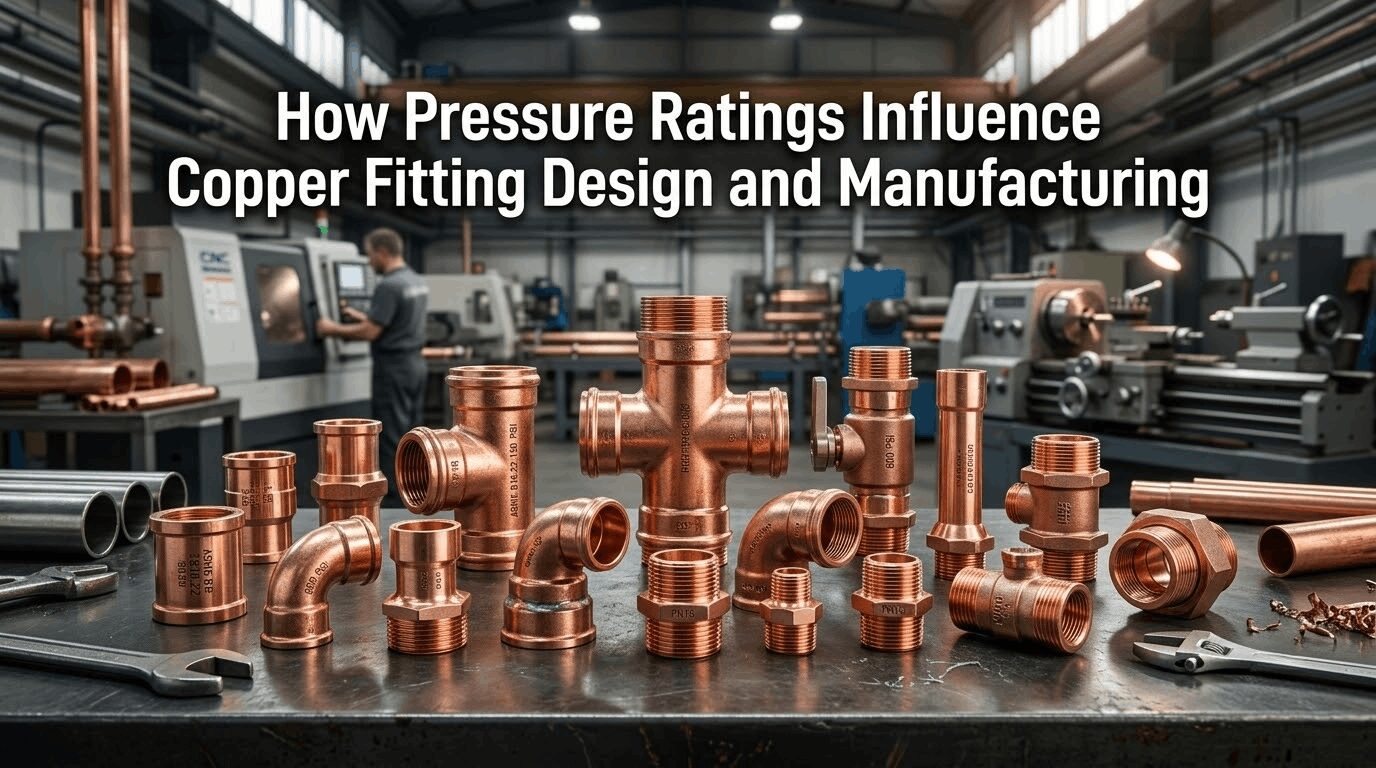
Pressure ratings define the operational limits and physical reliability of copper piping systems. Engineers cannot rely on fitting size and base material alone to determine performance boundaries. Operating temperature, internal geometry, wall dimensions, joining methods, and regulatory standards influence the final working capacity. Partnering with a technically capable copper plumbing fittings supplier like C-Flo ensures project specifications align with actual component capabilities. System failures stem from ignoring these interacting variables during the mechanical specification phase.
What Determines the Pressure Rating of Copper Fittings?
Multiple physical and operational factors impose internal pressure capability. System demands and specific product standards establish the actual structural limits.
Primary influences include:
- Material grade and mechanical characteristics
- Fitting dimensions and specific wall thickness
- Component size and internal fluid geometry
- Maximum operating pressure and peak temperature
- Base tube compatibility and tolerances
- Selected joining method
- Applicable manufacturing and testing standards
Designers evaluate these variables collectively. A change in a single parameter shifts the allowable pressure limit for the entire piping run. Specifying a different joining method requires a complete correction of the system pressure rating.
How Pressure Requirements Influence Fitting Design
Manufacturers design copper components to resist specific stress loads over decades of continuous service. Wall thickness and strict dimensional tolerances form the baseline for pressure containment. Design teams adjust these physical dimensions based on the expected hoop stress and internal forces at work within the system.
Elbows, tees, reducers, and couplings direct fluid flow and create zones of high physical stress. Engineers analyse stress concentration around these directional changes to prevent premature metal fatigue. They reinforce critical physical areas without obstructing internal flow pathways. A tee fitting distributes pressure differently from a straight coupling, requiring specific wall thickness adjustments at the branch intersection.
The tube-to-fitting interface requires exact dimensional clearances. Connection-end design determines how well the fitting accepts the tube and secures the final joint. Several heavy-duty applications mandate formal design qualification to prove the component withstands cyclic pressure spikes and thermal expansion without structural yielding.
Material Selection and Its Effect on Pressure Performance
Base metal properties define baseline component strength. Procurement teams base material selection on the complete mechanical service specification. Assuming all copper components share identical pressure capabilities leads to critical system weaknesses, especially in high-pressure HVAC or industrial fluid lines.
Specific copper alloys exhibit distinct mechanical properties under continuous load. Manufacturers select material grades like UNS C12200 phosphorus-deoxidised copper based on specific yield strength and thermal stability requirements. Temperature changes how the metal reacts to internal force. Hard-drawn materials offer different rigidity and burst pressure resistance compared to fully annealed options.
The selected metal grade must withstand heat or mechanical deformation without losing structural integrity. Process variables determine the final metallurgical state of the installed component. Heating a hard-drawn fitting during installation locally anneals the metal and permanently changes its physical yield strength.
Manufacturing Controls for Pressure-Rated Fittings
Consistent manufacturing supports reliable pressure performance. Factories implement rigid quality controls at every production stage. Minor dimensional deviations compromise the structural integrity of the final piping system under peak loads.
Production begins with strict material verification. Facilities test incoming raw materials to confirm chemical composition and physical tensile strength. Forming, machining, hot forging, and cold fabrication processes shape the component while maintaining core material strength.
Dimensional accuracy prevents catastrophic installation failures. Production machines hold tight tolerances to ensure proper tube insertion depth and optimal joint formation. Wall-section consistency prevents thin spots that could rupture under peak internal system pressure.
End preparation and surface quality determine long-term joint reliability. Smooth, defect-free surfaces allow liquid solder to flow evenly via capillary action. Clean internal surfaces allow elastomeric O-rings to seal completely in mechanical systems. Final inspection protocols require specific hydrostatic or pneumatic leak testing to validate the manufacturing batch before authorised shipment.
How Joining Methods Affect Pressure Performance
The assembly technique permanently alters the physical pressure boundary. Installers consider the copper tube, the fitting, and the joining material as one collective pressure-containing unit. The weakest link in this assembly dictates the maximum safe operating threshold for the entire line.
Soldering and brazing introduce intense heat into the copper structure. This thermal cycle locally anneals the metal and reduces its original yield strength. ASME B16.22 defines pressure and temperature ratings for wrought copper solder-joint pressure fittings based on specific solder alloys like 95/5 tin-antimony. ASME B16.50 details the requirements for braze-joint equivalents. Brazed connections withstand significantly higher internal temperatures and physical forces than soldered alternatives.
Press-connect systems rely entirely on mechanical deformation and internal elastomeric seals. ASME B16.51 governs these components and outlines exact pressure-temperature ratings alongside mandatory design qualifications.
Role of Standards in Establishing Pressure Ratings
Engineering standards provide the technical baseline for component comparison. Buyers and engineers identify the governing standard before evaluating listed pressure ratings. These technical documents strip away ambiguity and establish clear baseline manufacturing requirements.
Committees develop specific testing codes for distinct component categories. ASME B16.22 sets rigid rules for soldered connections. ASME B16.18 covers cast copper alloy fittings. ASME B16.50 targets brazed systems. ASME B16.51 addresses mechanical press-connect technology.
These documents dictate acceptable physical dimensions, approved material grades, and mandatory testing protocols. They establish the actual pressure and temperature limits for specific system types. Relying on standards ensures the specified components meet verified engineering benchmarks.
Pressure Rating and Operating Temperature
Heat degrades the physical structural strength of all copper piping systems. Rated operating pressure always corresponds to a specific operating temperature. Elevating the system temperature automatically reduces the allowable internal fluid pressure.
Engineers plot pressure-temperature limitations on distinct material degradation curves. A system carrying 50°F chilled water operates under entirely different pressure constraints than a 250°F high-pressure boiler feed line. Base tube and fitting compatibility shift as extreme thermal expansion occurs.
Joint performance degrades rapidly under extreme thermal loads. Tin-based solder softens and fails at specific temperature thresholds. Elastomeric EPDM or FKM O-rings harden, crack, and fail if exposed to fluid temperatures beyond their specific design limits. Designers evaluate maximum peak service conditions against the exact limits defined in the governing component standards.
What Should Buyers Consider When Selecting Copper Fittings?
Sourcing requires matching exact technical specifications with proven supplier capabilities. Procurement teams need a structured mechanical approach to evaluate piping components prior to purchase.
Review this practical evaluation checklist before issuing purchase orders:
- Confirm exact fitting type and required internal dimensions.
- Verify the specific copper material grade and manufacturing temper.
- Match component tolerances with the selected base tube specification.
- Calculate maximum normal and peak operating pressure limits.
- Define the highest possible continuous operating temperature.
- Specify the exact joining method required by the onsite installers.
- Identify the governing ASME or international product standard.
- Request specific details on factory pressure testing and inspection routines.
- Demand complete material certification and compliance documentation.
- Evaluate the heavy manufacturing capacity and quality control of the supplier.
This structured technical evaluation prevents unexpected failures in the field. Component specification drives overall system longevity.
Conclusion
Pressure performance depends on complex physical interactions within the mechanical piping system. Material grade, internal flow geometry, wall dimensions, joining methods, and extreme operating conditions define the actual component limits. Adhering to established engineering standards ensures baseline system reliability. Securing parts from a technically capable supplier guarantees access to accurate material specifications and required compliance documentation. Reliable fluid systems start with precise component selection and strict quality verification.
