

How Stainless Steel 202 Flat Bars Support Modern Fabrication Applications
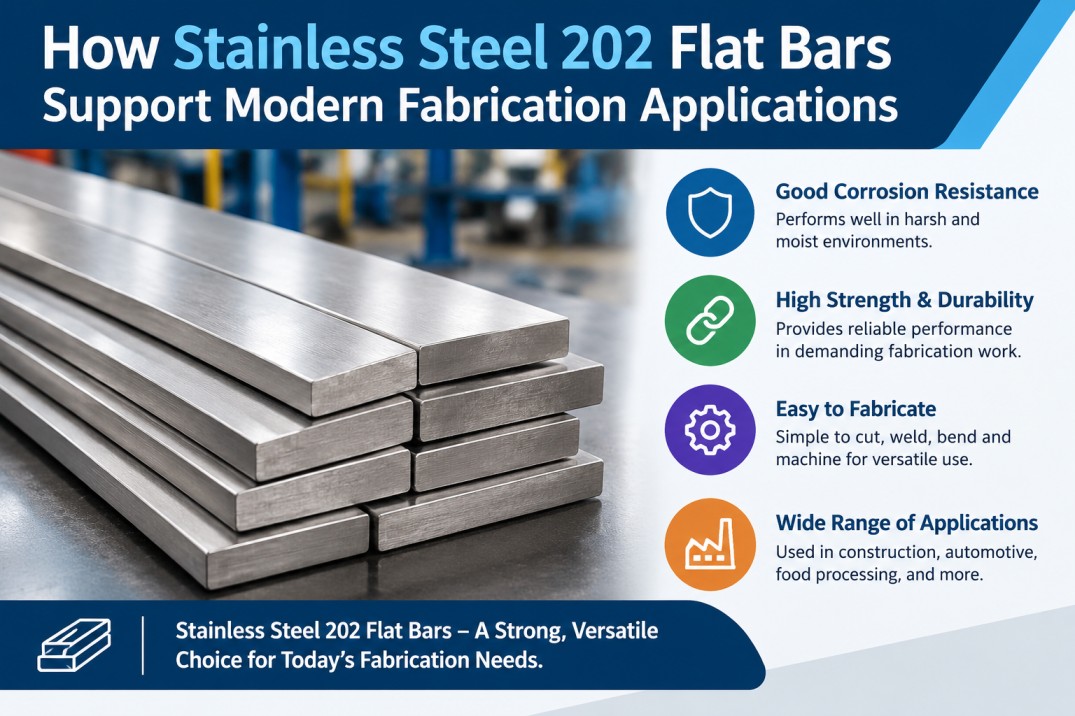
Fabricators require materials that balance structural integrity with strict cost control for mild environments. These rectangular components offer chemical compositions that offer solid formability alongside adequate corrosion resistance. Projects involving indoor structural frameworks, HVAC supports, or decorative trims often specify this material to manage project budgets. Using this specific alloy prevents mechanical stability issues in climate-controlled environments. Purchasing managers utilise these properties to control expenses.
What are 202 Grade Stainless Steel Flat Bars?
The 202 alloy falls strictly under the austenitic classification. Metallurgists substitute a significant portion of nickel with 7.5 to 10 percent manganese and added nitrogen during the melt. Manufacturers produce these rectangular sections through targeted hot rolling or cold drawing processes. This chemical adjustment reduces raw material pricing while maintaining a stable austenitic microstructure. Metal processing companies use the resulting flat rectangular cross-section to construct industrial supports and rigid brackets.
Key Properties of the Material
Mechanical engineers specify Stainless Steel 202 Flat Bars for their solid tensile strength and moderate corrosion resistance. Surface finish options vary from rough mill textures to highly polished aesthetic surfaces. Formability remains a distinct operational advantage on the shop floor. Operators shape the material easily using standard press brakes. Heat resistance meets standard indoor operational parameters without structural degradation. The metal retains non-magnetic characteristics under properly annealed conditions. Machinability ratings allow for standard cutting speeds without excessive tool wear. Durability holds up perfectly in low-moisture environments.
How 202 Grade Bars Support Modern Fabrication
Conventional fabrication methods align perfectly with this specific alloy. Bending and forming processes require standard tonnage on shop equipment. Fabricators experience consistent dimensions during CNC machining operations. Operators manage welding tasks using standard TIG setups. Production lines output structural and decorative components efficiently because the metal cuts precisely. Balancing operational performance and material cost happens naturally.
Important Factors to Consider Before Sourcing
Material Requirements
Required strength determines the initial material selection. Evaluate the end-use environment directly against anticipated corrosion exposure limits. High-moisture areas demand different metallurgical solutions entirely. Surface finish impacts both installation aesthetics and ongoing maintenance schedules for the end user.
Dimensions and Tolerances
Specify exact width and thickness requirements on the purchase order. Length availability usually spans 3 to 6 meters from standard mills. Strict dimensional tolerances prevent fitting issues during final assembly. Custom sizes reduce scrap rates significantly on the shop floor.
Fabrication Requirements
Cutting and drilling demand specific tooling speeds to prevent work hardening. Welding procedures must consider heat input variables to maintain joint integrity. Grinding steps achieve the final desired appearance safely. Operators must match SS 202 Flat Bars with their internal equipment capabilities before issuing purchase orders to procurement.
Common Applications in Industry
Architectural fabrication relies on these rectangular sections for interior frameworks. Kitchen equipment manufacturers build structural bases using this specific grade. Furniture frames benefit from the material’s inherent structural rigidity. Installers construct railings in climate-controlled commercial buildings. Automotive facilities include these as non-critical support brackets along assembly lines. Manufacturing machinery uses these sections as safety guards. Construction sites generally implement them as indoor structural supports. Typical SS 202 Flat Bar Uses encompass general fabrication projects where extreme chemical exposure remains completely absent.
Advantages of the 202 Grade
A strong strength-to-cost ratio drives procurement decisions across major industries. Good formability reduces processing time directly on the shop floor. The material presents an attractive appearance after standard polishing procedures. Fabrication happens without requiring specialized high-alloy tooling or advanced machinery. Reasonable corrosion resistance protects indoor components effectively for years. Maintenance requirements stay minimal over the entire product lifespan. Suppliers stock different sizes and finishes regularly to meet rapid demand.
202 vs 304 Grade Comparison
Grade 304 provides higher corrosion resistance due to elevated nickel content near 8 percent. Demanding environments require 304 usage solely. Facilities specify 202 for suitable applications where environmental exposure remains low and cost control takes priority.
| Feature | Grade 202 | Grade 304 |
| Corrosion Resistance | Moderate | High |
| Yield Strength | High (approx 275 MPa) | Standard (approx 205 MPa) |
| Formability | Good | Excellent |
| Fabrication Suitability | Standard indoor | Versatile indoor and outdoor |
| Cost Considerations | Lower initial cost | Higher initial cost |
| Environmental Suitability | Low moisture | Humid or chemical exposure |
Engineers evaluate these variables based on site conditions. Selecting the higher alloy reduces spending on indoor framing. Selecting the lower alloy causes rust in chemical zones.
Common Mistakes to Avoid
Installing this material in highly corrosive environments causes early structural failure. Selecting incorrect thickness dimensions compromises load-bearing integrity immediately. Ignoring fabrication requirements leads to manufacturing delays. Overlooking surface finish specifications generates extra finishing work post-assembly. Buying raw material without certification introduces serious quality risks.
Tips for Selecting a Reliable Supplier
Request material certifications immediately during the quoting process. Mill Test Certificates confirm exact chemical composition and mechanical properties. Verify standard industry compliance for your specific region. Check vendor track records regarding dimensional accuracy and delivery times. A competent Stainless Steel 202 Flat Bar Manufacturer runs internal quality testing before dispatching material. Review stock availability to avoid project schedule delays. Discuss custom size availability if your design requires non-standard dimensions. Demand proper packaging to prevent transit damage. Evaluate vendor technical support responsiveness prior to ordering.
Conclusion
These rectangular profiles support modern manufacturing through specific strength and cost variables. Success requires selecting correct dimensions, finishes, and industry specifications. Proper evaluation of Stainless Steel 202 Flat Bars against project parameters guarantees structural stability. Engineered choices protect both project budgets and long-term structural performance.
