

When Should You Use ERTi-12 Titanium Filler Wire?
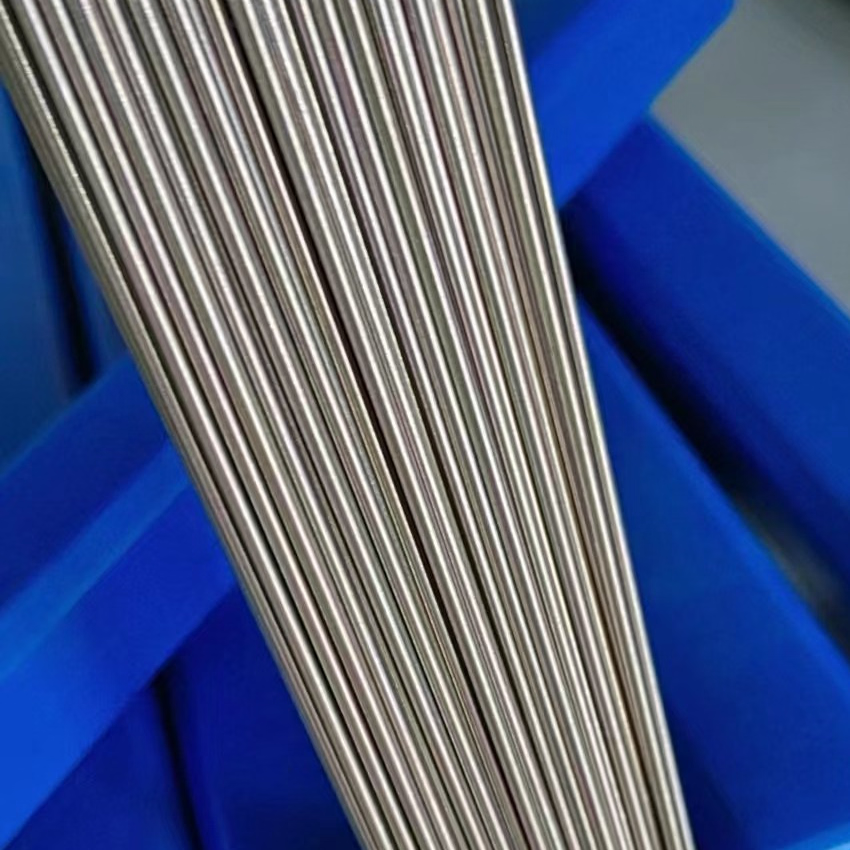
ERTi-12 Titanium Filler Wire is selected for specific titanium welding applications where the base-metal grade, corrosion environment, welding process, and required weld properties justify its use. The selection depends directly on the base metal grade sitting on your welding table. You must evaluate the welding process, the service environment, and the required physical weld properties before striking an arc. Grade 12 titanium contains small but critical additions of molybdenum and nickel. These specific alloys change how the weld pool solidifies and how the joint performs under mechanical stress. The wire handles environments where standard titanium grades degrade.
What Is ERTi-12 Titanium Filler Wire?
ERTi-12 is a bare solid welding wire classified by the American Welding Society. Welders feed it manually during TIG welding or push it through a specialized spool gun for MIG welding. The wire composition matches Grade 12 titanium base metal. The small amounts of molybdenum and nickel give this wire better crevice corrosion resistance than standard commercially pure titanium grades. The metal flows smoothly in the weld puddle when shielded properly with argon gas. The wire surface must be absolutely clean before use. Fabricators source ERTi-12 Titanium Filler Wire to match specific project requirements where standard unalloyed wire will fail inspection.
When Should You Use ERTi-12?
For Welding Commercially Pure Titanium
You can use ERTi-12 for joining suitable commercially pure titanium grades under specific conditions. Sometimes engineering drawings specify a stronger weld joint than the base metal. The filler composition must match the required weld properties calculated by the structural engineer. Using this wire on Grade 2 or Grade 3 titanium changes the chemistry of the weld zone. You only do this when the approved welding procedure explicitly calls for it to improve joint strength or corrosion resistance.
For Titanium Fabrication Projects
Builders use this wire in fabricating titanium components where corrosion resistance, low density, and strength matter simultaneously. The wire handles high heat and continuous structural loads well. Fabricators use it to build heavy heat exchangers, pressure vessels, and large industrial piping systems. The welded joints retain the low weight characteristic of titanium while providing elevated mechanical strength. The weld metal does not lose its structural integrity under pressure.
For Repairing Titanium Components
Maintenance crews rely on this filler wire for suitable titanium repair and maintenance work. A cracked pipe or worn flange face requires fresh metal buildup. You only apply ERTi-12 when the filler metal is compatible with the original material. If you weld this over a completely different titanium alloy, the joint will crack as it cools. You must identify the exact base metal grade on the equipment tag before attempting any field repair.
For Corrosion-Resistant Applications
Certain industrial environments destroy standard metals in weeks. You use ERTi-12 in applications where titanium’s resistance to corrosive environments is a hard requirement. The nickel and molybdenum in the wire provide excellent resistance to crevice corrosion. This is a specific type of localized attack that happens under flange gaskets or bolt heads. You use this wire for equipment exposed to demanding chemical or marine conditions where ordinary steel melts away.
For Chemical Processing Equipment
Chemical plants run hot and pump aggressive acids continuously. Engineers specify ERTi-12 for fabricating or repairing components used in chemical-processing environments. The welded joints resist hot brine and mild reducing acids. Standard titanium filler wire might suffer pitting in these exact environments. The Grade 12 wire provides the specific chemical resistance required to keep the processing lines running without leaks or unexpected shutdowns.
For Marine and Seawater Applications
Saltwater corrodes standard steel rapidly. You need suitable titanium welds in marine equipment and components exposed to seawater. Shipbuilders and offshore platform operators use ERTi-12 to join titanium pipes handling raw seawater for cooling systems. The welded joints can provide reliable service in chloride-containing environments when the material and welding procedure are appropriately specified. The metal does not rust or pit even when submerged in the ocean for decades.
For TIG Welding of Titanium Components
Gas Tungsten Arc Welding requires clean wire and perfect gas coverage. ERTi-12 functions properly where controlled TIG welding is required. Titanium absorbs oxygen and nitrogen from the ambient air when heated above certain temperatures. This atmospheric contamination makes the weld extremely brittle. Welders use trailing shields and purge gas to protect the heated titanium from the air. The ERTi-12 wire melts cleanly and fuses well when the welder maintains a proper argon shield over the puddle.
What Makes ERTi-12 Suitable for These Applications?
This specific wire provides several physical advantages on the shop floor.
- Corrosion resistance. It fights off crevice corrosion in hot chloride environments.
- Titanium compatibility. It matches Grade 12 base metal perfectly.
- Weld strength. The alloy additions create stronger joints than unalloyed titanium wire.
- Low density. The welded components remain physically lightweight.
- High-temperature capability. The joints handle elevated temperatures up to 300 degrees Celsius safely.
- Suitable TIG/MIG welding characteristics. The wire feeds consistently and creates a stable arc under inert shielding gas.
How to Know if ERTi-12 Is the Right Filler?
You must review the engineering data before striking an arc. First, check the exact base titanium grade. Mixing incompatible grades causes immediate weld failure and cracking. Check the specified welding process. Confirm the maximum service temperature of the final component. Evaluate the exact corrosive environment the weld will face in the plant. Verify the required mechanical properties on the drawing. Review the joint design and the required weld size. Confirm the applicable AWS specification listed on the purchase order. Finally, read the approved welding procedure. If the procedure requires Grade 12 wire, you use ERTi-12.
Conclusion
ERTi-12 works specifically for joining and repairing Grade 12 titanium components. The small additions of nickel and molybdenum provide better strength and corrosion resistance than commercially pure wire. Filler selection must always match the titanium base material, the designated welding process, and the field service conditions. Companies like Shanti Metal supply these filler metals for industrial fabrication requirements. Never substitute titanium wire grades without checking the welding procedure and the required mechanical properties first. Proper wire selection prevents joint failure under stress.
