

Difference Between Original Ruby Stone and Synthetic Ruby Stone
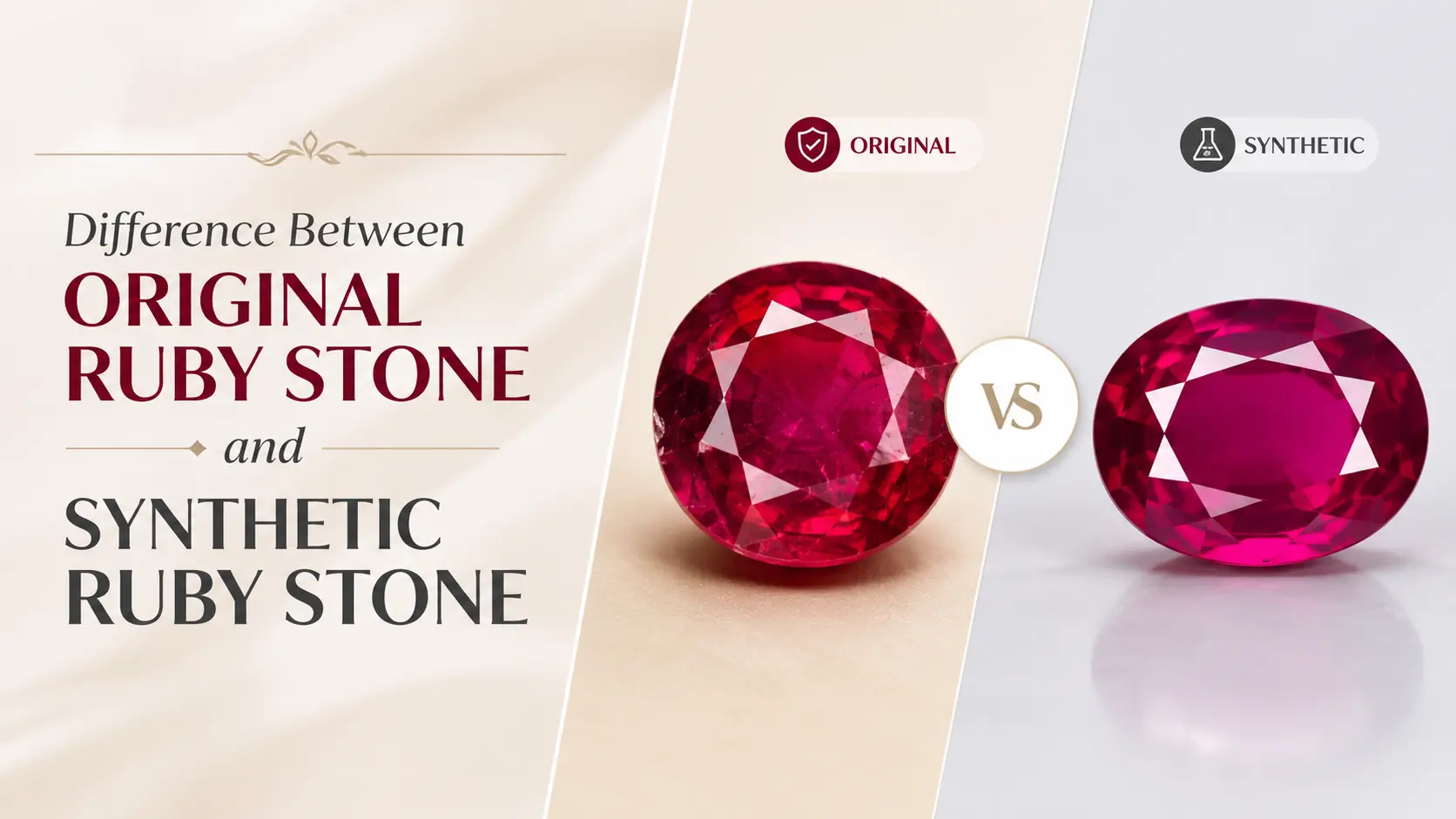
Introduction: Original Ruby Stone Vs. Synthetic
Are you planning to buy a Ruby Stone but feeling confused about your choice? Are you unsure whether to buy an original ruby or a synthetic ruby? Then, you are at the right place to understand both options clearly.
Both types of ruby suit different needs, budgets, and reasons for buying. In this blog, we explain a full comparison between the original Ruby and the synthetic one. We also highlight the major points, like key differences, benefits, price, significance, advantages that you should consider before choosing one.
So, let start:
What is a Ruby Stone – Manik Patthar?
Ruby Stone, also called Manik Patthar, is a red variety of corundum. It mainly contains aluminum oxide, with chromium giving it the red color. Natural Ruby Gemstone has a hardness of 9 on the Mohs scale & this makes it highly durable. Its shades can range from pinkish red to deep vivid red.
Significance of Ruby Stone
- It represents the Sun
This gem is traditionally linked with the Sun and its energy.
- This is a symbol of confidence
It is believed to support courage, confidence, and strong leadership qualities.
- Largely associated with success
It is traditionally considered helpful for growth, fame, and achievement.
- This gem is known to represent passion
Its bright red shade is linked with love, passion, and vitality.
- It is valued for its royal appeal
Ruby has long been valued for its beauty, rarity, and rich color.
A Synthetic Ruby Stone: Specifications & Advantages
A synthetic ruby stone is created in a laboratory using controlled growth methods. It has the same basic composition and crystal structure as natural ruby. It mainly contains aluminum oxide, with chromium producing its red color. It also has almost the same type of hardness and durability as natural ruby.
Key Features of Synthetic Ruby
- Chemically similar to natural ruby
- Red color with various shades
- 9 Mohs hardness
- High durability for jewellery
- Available at a lower price
Full Comparison between Original Ruby Stone Vs. Synthetic
An original ruby and a synthetic ruby differ in origin, value, quality, price, and significance. You first need to understand these factors, as they will help buyers select the right type of ruby stone for their needs.
1. Origin and Formation
An original ruby forms naturally inside the earth under special geological conditions. A synthetic ruby is created inside a laboratory using controlled growth methods.
Natural formation takes millions of years and makes each Manik Stone unique. Synthetic rubies can be produced faster & this makes them widely available in the market.
2. Composition and Ruby Specifications
Both stones mainly contain aluminum oxide and chromium & this gives ruby its red color. Their hardness, crystal structure, and basic Ruby specifications are also largely similar.
However, their internal features can differ because their growth conditions are different. Natural rubies often contain inclusions that are formed naturally during their growth.
3. Colour and Appearance
An original ruby can show shades ranging from pinkish red to vivid deep red. Its color may vary slightly because of its natural growth conditions.
Synthetic rubies can also offer bright and attractive red shades. However, their color may appear more even due to controlled laboratory production.
4. Inclusions and Clarity
Natural rubies usually contain small inclusions, as they were created during their formation inside the Earth. These inclusions can help experts to identify whether a ruby stone is natural.
Synthetic rubies may have fewer inclusions or show specific growth marks. A gem expert can examine these features using magnification and other testing methods.
5. Price and Market Value
The original ruby price is usually much higher than the synthetic ruby price. Natural rubies are valued for their rarity, quality, origin, and treatment status.
Synthetic rubies cost less because laboratories can produce them in larger quantities. The ruby price in India also varies based on quality, weight, origin, and certification.
6. Durability and Jewellery Use
Both natural and synthetic rubies offer excellent durability for regular jewellery use. They have a hardness of 9 on the Mohs scale, making them highly resistant.
Both options can be suitable for rings, pendants, earrings, and other jewellery.
However, treated rubies may need special care depending on their treatment type.
7. Significance and Astrological Value
The significance of the Ruby Stone is strongly connected with traditional astrological beliefs. An original Ruby, or Manik gemstone, is traditionally associated with the Sun.
Many people choose a natural Manik Stone because of its traditional importance. Synthetic ruby may offer similar appearance but does not carry the same traditional value.
Key points to consider:
- Natural origin
- Traditional astrological importance
- Rarity and uniqueness
- Personal beliefs
8. Resale Value and Long-Term Worth
An Original Ruby generally has better long-term value than a synthetic ruby. Fine natural rubies can retain strong demand because of their rarity and quality.
Synthetic rubies usually have limited resale value compared with natural stones. Therefore, buyers seeking long-term value may prefer a certified natural Ruby Stone.
Why is Buying an Original Ruby Stone Important?
By now, you may understand why buying an original Ruby is important. But the main question is, how can you identify one? You can look for these qualities in a Ruby Stone before making your purchase.
- Naturally formed inside the earth over millions of years.
- Bright, rich, and naturally distributed red color.
- Small natural inclusions formed during its growth.
- Proper certification from a trusted gem laboratory.
- Clear weight, cut, clarity, color, and treatment details.
At Rashi Ratan Bhagya, you can get an original ruby with all these qualities. The gem quality, authenticity, and ruby specifications are checked through multiple stages before reaching you. You can also visit the Rashi Ratan Bhagya website to learn more details.
Conclusion
In conclusion, we have provided you all the details about original and synthetic Ruby Stone. Both options serve different purposes and suit different buyer needs.
Therefore, make your requirements clear before choosing one. If you prefer natural origin, rarity, and traditional value, an original ruby can be considered.
FAQs
Q1: How can I identify an original Ruby or genuine Manik Stone?
Ans: You need to check its natural inclusions, rich colour, certification, and Ruby Specifications before buying a Manik Gemstone.
Q2: What factors affect the original Ruby Price and Ruby price in India?
Ans: Mainly of colour, clarity, carat weight, origin, treatment, certification, and overall quality determine the original Ruby price.
Q3: What is the difference between original Ruby and synthetic ruby?
Ans: Original Ruby offers natural rarity and traditional significance of Ruby Stone, while synthetic ruby has a lower synthetic Manik price.
