

Breastfeeding in Singapore’s Heat: What Actually Helps
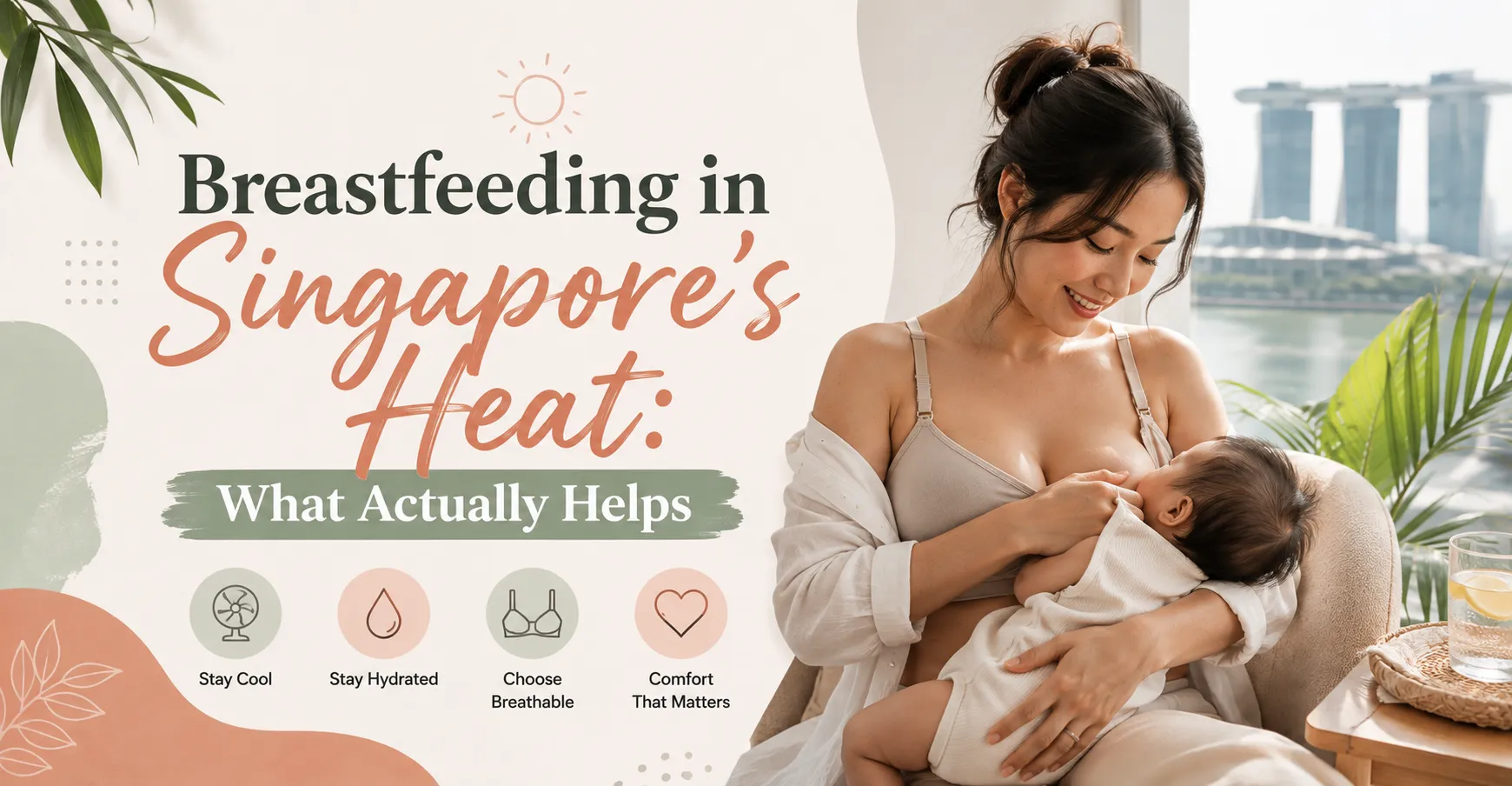
Breastfeeding already involves a lot of close contact. Add Singapore’s heat and humidity and it can quickly feel uncomfortable. Your baby is warm against you. Your bra may feel damp. Even a normal feeding session can start to feel tiring.
The heat itself does not usually make breastfeeding harder. The bigger problem is the discomfort around it. Sweating can irritate the skin. Damp clothes can feel sticky. Both you and your baby may feel too warm.
You do not need one perfect solution. A cooler room can help. So can lighter clothes and enough water. The right nursing bra may also make feeding more comfortable.
Does Singapore’s Heat Affect Breastfeeding?
Think about feeding your baby after coming home on a warm afternoon. You are already hot. Then your baby settles against your chest for a feed.
A few minutes later your arm feels warm. Your bra feels damp. Your baby may feel sticky too. Breastfeeding has not suddenly changed. It just feels harder because both of you are uncomfortable.
Singapore’s Health Promotion Board says using a fan or air conditioner is fine when it helps mum and baby stay comfortable. It also notes that heavy clothing can contribute to heat rash in Singapore’s climate.
So there is no need to struggle through a feed in a hot room. Move somewhere cooler if you can. Turn on the fan. Use the air conditioner when needed.
Sweating Can Make Feeding Less Comfortable
Sweating around the chest and under the breasts is common in warm weather. The problem starts when moisture stays against the skin for too long.
Too much heat and moisture can make the skin under your breasts feel sore or irritated. If the area stays damp for too long it may also lead to a rash such as intertrigo.
Most of the time sweat is simply annoying. Still, sitting through several feeds in a damp bra is not pleasant.
Change into something dry when you can. Gently dry the skin after sweating. Give the area some airflow. Speak with a healthcare professional if irritation becomes painful or does not improve.
What About Your Baby Getting Too Hot?
This is something many new mums worry about.
Feeding naturally brings your baby close to your body. On a hot day that can make both of you feel warmer than usual.
You do not need to change the way you feed. Start by making the room more comfortable. A fan or air conditioner may help. Avoid unnecessary layers on your baby during feeds.
Every mum will notice the heat differently. Some feel fine once the room is cool. Others still sweat easily. Find the setup that works for you.
Does Hot Weather Affect Milk Supply?
Humidity itself is not something you need to blame every time your milk supply feels different.
Regular and effective milk removal remains important for maintaining supply. HealthHub also recommends enough rest and fluids for breastfeeding mums.
The practical issue in hot weather is hydration. You may sweat more during the day. Keeping water near the place where you usually feed can make it easier to drink regularly.
There is no need to turn it into another task to track. A bottle beside your feeding chair is often enough.
For exclusively breastfed babies under six months WHO advises that extra water is not usually needed even in hot weather. Babies may simply want to breastfeed more often.
Your Nursing Bra Can Make a Difference
Before breastfeeding you may have chosen bras mainly for support and appearance.
Once you are feeding several times a day different things start to matter.
Does the fabric feel hot?
Does the band rub when you sweat?
Can you open it easily?
Does it stay damp for hours?
These are useful questions when comparing nursing bra Singapore options.
A nursing bra should make breast access easier. In humid weather it also needs to feel comfortable between feeds.
Choose Fabric With Singapore’s Weather in Mind
Lightweight fabric can feel much better on warm days. Breathable materials allow more airflow around the skin. Quick drying fabrics may also help if you sweat often.
Do not assume every synthetic fabric is uncomfortable. Some blends are made to manage moisture well. The bigger issue is thick fabric that stays hot and damp against the skin.
When choosing a nursing bra think about your normal day. You may walk outside with the stroller. You may spend time on the MRT. You may feed somewhere without strong air conditioning.
The bra needs to feel comfortable during those moments too.
What Actually Helps on Hot Breastfeeding Days?
There is rarely one big fix. Small changes usually help more.
Keep water near the places where you feed most often. It saves you from getting up when your baby has finally settled.
Use the coolest room in the house. It does not have to be the nursery. Feed where you and your baby feel comfortable.
Think about layers as well. A bra plus nursing pads plus an inner top can quickly feel like too much fabric. At home you may prefer fewer layers.
Change a damp bra when you can. You do not need a fresh one after every little bit of sweat. But staying in a wet bra for hours can irritate the skin.
This is also why having more than one everyday nursing bra can be useful. You have something dry to wear while another one is being washed.
Different Mums Need Different Things
There is no perfect breastfeeding setup for everyone.
One mum may feel much better after switching to a lighter nursing bra. Another may be comfortable in almost anything as long as the air conditioner is on.
Your routine matters too. Staying home most days is very different from commuting and pumping at work.
What feels right during the first month may also change later. That is normal.
When looking at nursing bra Singapore choices think about your own routine first. You do not need to follow someone else’s must have list.
So Does the Heat Make Breastfeeding Harder?
Sometimes it can feel that way. Most of the difficulty comes from being hot and uncomfortable.
Singapore’s humidity can mean more sweat and damp fabric. Add a warm baby against your chest several times a day and feeding can become tiring.
Keep things simple. Drink enough water. Feed somewhere cool. Wear lighter clothes. Change out of damp clothing when needed.
A comfortable nursing bra can help too. It should give you easy feeding access without making you feel hotter.
There is no perfect setup. The best one is simply the one that keeps you and your baby comfortable.
FAQs
Does humid weather reduce breast milk supply?
Humidity itself does not automatically reduce milk supply. Regular feeding and effective milk removal remain important. Drinking enough fluids is also helpful when you are sweating more.
What fabric works well for a nursing bra in Singapore?
Look for lightweight and breathable fabric. Quick drying material can also be useful if you sweat a lot. Focus on how the bra actually feels rather than choosing only by fabric name.
Can sweating cause irritation while breastfeeding?
Yes. Heat and trapped moisture can irritate the skin under the breasts and around the bra line. Keeping the area clean and dry can help.
Should I give my baby extra water in hot weather?
For exclusively breastfed babies under six months WHO advises that breast milk provides the water they need. Your baby may simply want to feed more often.
How many nursing bras do I need?
There is no fixed number. If you sweat often or experience milk leakage having a few bras in rotation can make daily life easier. Start with what suits your routine.
