

Top Industries That Benefit from Liquid Filling Machines
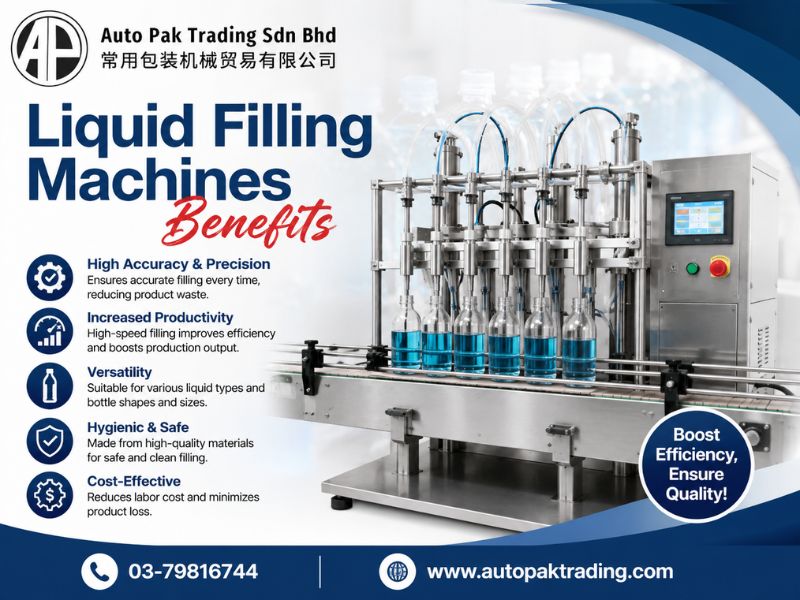
Liquid filling machines are utilized in the food, drink, pharmaceutical, cosmetic and chemical sectors to help to fill containers with liquids in an automated way. These machines increase machine speed, minimize product waste and provide uniform fill volumes. Businesses handling anything from water and sauces to serums and industrial solvents rely on them to maintain quality and scale output efficiently.
But if you manage a production line or are considering expanding your production line, knowing which industries benefit most from a liquid filling machine can aid in making a wise investment choice. Let’s take a look at the industry by industry.
Why Liquid Filling Machines Matter for Modern Manufacturers
Manual filling is slow, inconsistent and costly at scale. A small variation in fill volume over thousands of units adds up to substantial product loss or compliance issues. Automated liquid filling solves this with repeatable accuracy whether you’re filling 10ml vials or 5-litre containers.
The type of machine that is suitable – piston fillers, overflow fillers, gravity fillers or volumetric fillers – depends on the viscosity of the liquid, the type of container and the desired output speed. Each industry has its own needs and the machines are manufactured to suit them.
Food and Beverage: Volume, Hygiene, and Consistency
Automated filling equipment is one of the biggest users in the food and beverage industry worldwide. Jams, jellies, sauces, cooking oil, dairy, flavoured syrups and condiments need high speed and hygienic filling with minimal contamination risk.
What Makes a Food Filling Machine Different?
Food filling machine product needs to meet the standards of food-grade material. Contact parts are usually made of stainless steel (SS 316) or food safe plastics. The design must enable CIP (clean in place) washing which will prevent any bacterial accumulation between production runs.
For thin liquids like juices or water, overflow or gravity fillers work best. For thicker products like tomato paste or jam, piston-based or gear pump fillers are more effective. Businesses in the food sector also benefit from volumetric accuracy — essential for labelling compliance and reducing giveaway.
Common food applications include:
- Edible oils and ghee
- Tomato ketchup and chilli sauces
- Dairy products like cream and yoghurt drinks
- Beverages — juices, flavoured water, energy drinks
- Honey and syrups
Cosmetics and Personal Care: Precision Meets Presentation
In the cosmetics industry, presentation and accuracy are everything. A cosmetic filling machine must handle a wide range of textures — from water-thin toners to thick body lotions and gel-based serums. Overfilling wastes expensive formulations. Underfilling triggers consumer complaints and regulatory scrutiny.
Challenges Unique to Cosmetic Filling
Cosmetic products may contain ingredients that foam easily, are volatile or are highly viscous. This requires machines with anti-drip nozzles, bottom-up filling, and adjustable speed controls. Temperature sensitive products such as wax based creams, for example, may need to be filled in heated hoppers to ensure consistency during filling.
If your business is making shampoos, conditioners, face washes, serums, or perfumes, an automated cosmetic filling machine minimises manual errors, enhances packaging consistency and enables quicker market launches – particularly when you’re handling multiple SKUs.
Key cosmetic products that use liquid filling machines:
- Shampoos and conditioners
- Face serums and toners
- Body lotions and creams
- Perfumes and eau de toilette
- Nail polish and liquid makeup
Pharmaceuticals: Where Accuracy Is Non-Negotiable
No industry demands more from a filling machine than pharmaceuticals. A pharmaceutical filling machine must deliver exact volumes consistently — dosing errors can have direct health consequences. Machines used in this sector must meet strict regulatory requirements, including GMP (Good Manufacturing Practice) compliance.
Types of Pharmaceutical Liquid Products Filled
Pharmaceutical liquid filling covers a broad range — from oral syrups and suspensions to injectable solutions, eye drops, and nasal sprays. Each product type demands a different machine configuration. Vial filling lines, ampoule filling machines, and syrup bottle fillers are all variations of the same core technology, adapted for sterility and dosing accuracy.
In order to manufacture in this sector, investing in a validated filling line is not optional – it’s a regulatory requirement. Machines must be calibrated, documented, and capable of maintaining clean room standards. The return on investment is significant: reduced batch failures, fewer rejections, and faster regulatory approvals.
| Industry | Common Products | Filling Machine Type | Key Requirement
|
|---|---|---|---|
| Food & Beverage | Sauces, juices, oils | Piston, Gravity, Overflow | Food-grade materials, CIP |
| Cosmetics | Serums, shampoos, lotions | Peristaltic, Piston | Anti-drip, foam control |
| Pharmaceuticals | Syrups, injectables, drops | Volumetric, Peristaltic | GMP compliance, sterility |
| Chemicals | Cleaning agents, lubricants | Gear Pump, Piston | Corrosion resistance |
Chemical and Industrial Products: Built Tough for Harsh Liquids
The chemical industry presents some of the most demanding filling conditions. Products like disinfectants, lubricants, adhesives, cleaning agents, and industrial solvents are often corrosive, flammable, or highly viscous. Standard machines simply won’t hold up.
Machines used for chemical filling are constructed with corrosion-resistant materials – HDPE components, stainless steel bodies and chemical-resistant seals. They are also built to cope with larger container formats, from 500ml bottles to 25-litre drums. Features such as explosion-proof motors and sealed filling environments are typical requirements for volatile substances.
Typical chemical sector applications:
- Household and industrial cleaning liquids
- Automotive lubricants and engine oils
- Agricultural pesticides and herbicides
- Adhesives and sealants
- Pool treatment chemicals
Agrochemicals and Fertilisers: A Growing Sector
In many countries, the agricultural sector is a major consumer of industrial demand. Reliable filling systems are required for liquid fertilisers, pesticide concentrates and crop protection sprays. Machines in this space need to be able to process high-density liquids accurately, while also complying to safety requirements for handling hazardous materials.
The agrochemical industries in small to mid-scale manufacturing have started to invest in semi automated and automatic filling lines to cater the increasing demand for agrochemical products in the farming areas of Punjab, Sindh and KPK during seasonal production peak demands they are facing without increasing the number of employees.
How to Choose the Right Machine for Your Industry
Selecting a filling machine isn’t just about matching it to your product — it’s about understanding your full production workflow. Here’s what business owners should evaluate:
- Viscosity of the liquid: Thin liquids need gravity or overflow fillers; thick pastes need piston or gear pump systems.
- Container type and size: Bottles, sachets, vials, and drums all require different nozzle and conveyor configurations.
- Output speed: Semi-automatic machines suit small-to-medium operations; fully automatic lines are better for high-volume production.
- Regulatory compliance: Pharmaceutical and food businesses need machines that meet GMP and food-grade standards.
- After-sales support: Spare parts availability and local technical support are critical for minimising downtime.
The Business Case for Investing in Automation
Manual filling operations typically lose 3–8% of product through spillage, inconsistency, and overfilling. At scale, this is a significant cost. An automated filling machine recovers this loss quickly, often paying for itself within the first year of operation depending on production volume.
Beyond cost savings, automation improves worker safety — particularly in chemical and pharmaceutical environments — and gives businesses the consistency needed to meet retailer and export standards. If you’re preparing to tender for supermarket shelf space or export contracts, a documented, automated filling process strengthens your compliance position significantly.
For businesses across Pakistan looking to invest in industrial filling equipment, Autopak Trading offers a range of liquid and paste filling machines tailored to food, cosmetic, pharmaceutical, and chemical applications — with local technical support and after-sales service that keeps your line running.
Frequently Asked Questions
What is a liquid filling machine used for?
A liquid filling machine is used to automatically fill a precise amount of liquid into containers such as bottles, vials or pouches.
Which type of liquid filling machine is best for thick products?
Piston filling machines are most suitable for thick or viscous products such as pastes, creams or sauces.
Do pharmaceutical filling machines need to meet special standards?
Yes. Pharmaceutical filling machines need to meet the GMP (Good Manufacturing Practice) standards. They need high fill accuracy, sterile contact surfaces and complete documentation for regulatory validation.
Can one filling machine work for multiple products?
Many modern filling machines are designed for multi-product use with adjustable nozzles, interchangeable contact parts, and programmable fill volumes. However, switching between food, chemical, or pharmaceutical products on the same machine is generally not recommended due to cross-contamination risks.
What is the difference between semi-automatic and fully automatic filling machines?
Semi-automatic machines require an operator to position containers and initiate each fill cycle, making them ideal for small-to-medium production volumes. Fully automatic machines handle container feeding, filling, and capping with minimal human input – best for high-volume operations requiring consistent output.
Is a liquid filling machine suitable for agrochemical products?
Yes, Machine must be built with corrosion-resistant materials such as stainless steel or HDPE-compatible seals to handle harsh chemical formulations. For flammable or volatile agrochemicals, explosion-proof motors and sealed filling environments are essential safety requirements that must be specified when purchasing.
