

Best Corporate Keynote Speakers: 9 Criteria to Judge Before You Book
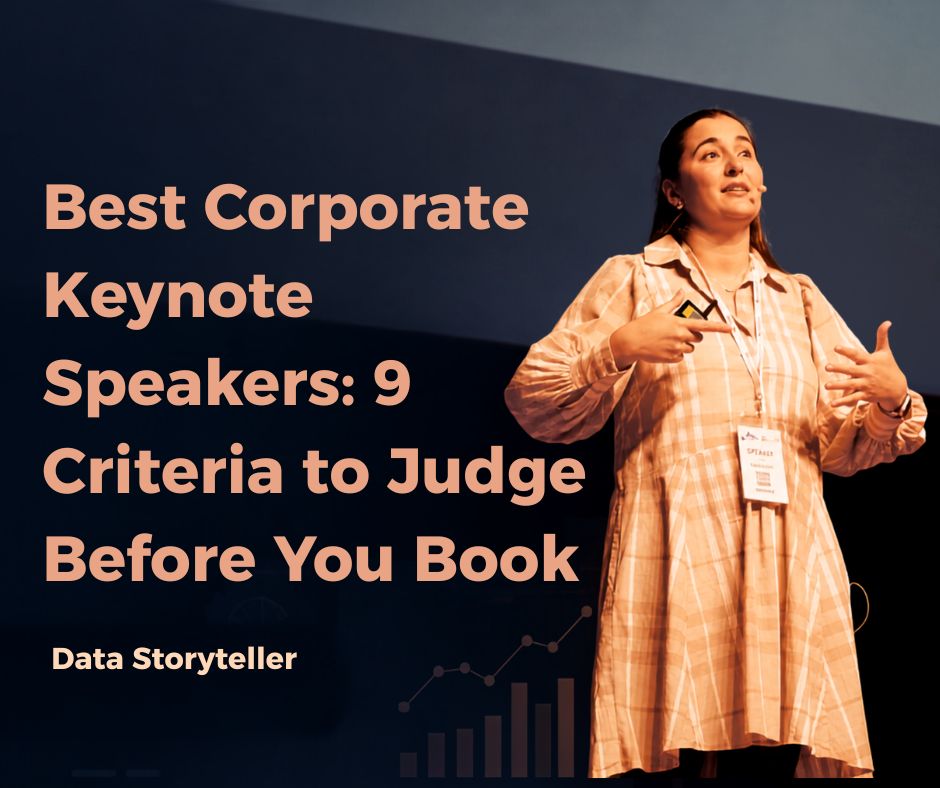
Search for the best corporate keynote speakers and you’ll find plenty of ranked lists. Most are written by agencies promoting their own rosters, which isn’t exactly neutral. I’m a speaker myself, so I’m in an awkward position writing this. But I’d rather you choose well than choose me by default.
So instead of another top 10, here’s a way to judge any speaker, including me. It’s part of our broader guide to keynote speakers in Australia.
What Does “Best” Actually Mean for Your Event?
The best corporate keynote speaker is the one whose expertise, style and message fit your specific audience and goals. There’s no universal ranking. A speaker who thrills a sales conference might fall flat at a government leadership forum.
Before you compare anyone, write down three things: who’s in the room, what you want them to do afterwards, and your budget. Measure every criterion below against those three.
The 9 Criteria
1. Relevant experience. Have they worked with audiences like yours? Look for real examples, not just a wall of logos.
2. Genuine expertise. Do they actually do the thing they speak about? A data speaker who has worked hands-on with data sounds different from one who’s only read about it.
3. Real tailoring. Ask what customisation looks like in practice. Adding your company name to the slides isn’t tailoring. Reviewing your reporting, your challenges and your audience is.
4. Audience engagement. Watch a full recording and look at the audience, not just the speaker. Are people leaning in, laughing, taking notes, or checking their phones?
5. Testimonials and references. Named, specific feedback beats “amazing speaker!” Better still, ask to speak with a past client about what changed afterwards.
6. Full-length video, not just a reel. A highlight reel shows someone’s best two minutes. Ask for a complete talk.
7. Publications, media and podcast presence. Books, articles and a regular podcast suggest sustained expertise and let you sample someone’s thinking before you commit. Mine include the book I’m Not a Numbers Person and the Make Data Talk podcast [add links], but whatever the format, look for evidence of depth.
8. Logistics and professionalism. Are they responsive, clear about AV needs and flexible when plans change? How they handle your emails is a preview of how they’ll handle your event.
9. Post-event support. Do they offer follow-up resources, a Q&A or a workshop? Inspiration fades quickly without something to hold onto. See our guide to business keynote speakers for a simple 30/60/90-day follow-up approach.
Tip: turn these into a scorecard. Rate each speaker from 1 to 5 and compare. It’s especially useful when several people are involved, because it shifts the conversation from “I liked her” to “here’s what we’re looking for.”
Red Flags to Watch For
Be cautious if a speaker:
- can’t provide a full-length video
- pitches the same talk to every client
- won’t do a briefing call
- promises dramatic results, such as “transform your whole business in 45 minutes”
- is vague about fees and inclusions
One of these isn’t necessarily a dealbreaker. Two or three together are worth pausing over.
Also, don’t assume expensive means better. Fees often reflect profile and demand rather than fit. A specialist who builds a session around your organisation’s challenges can deliver more than a famous name with a generic talk.
Comparison Table: Speaker Bureau vs Direct Booking
| Speaker bureau | Booking direct | |
|---|---|---|
| Choice | Wide range of speakers | One speaker’s expertise |
| Cost | May include a bureau commission | Often no intermediary fee |
| Communication | Through an agent | Straight to the speaker |
| Customisation | Depends on agent’s access | Usually a direct conversation |
| Best for | You know your goal but not your speaker | You already have someone in mind |
Neither is better in every case. A bureau helps when you’re still exploring. Booking direct tends to be faster and clearer, particularly when customisation matters.
A final test: after a briefing call, ask yourself whether the speaker asked you good questions about your audience. The best speakers I know spend more of that first call listening than talking.
Want to See If I’m the Right Fit?
I’d rather you ask hard questions than book blind. Have a look at my data storytelling speaker page or get in touch, and I’ll share a full-length video and references on request.
Final Thoughts: Choosing the Best Corporate Keynote Speakers for Your Event
There’s no single list that can tell you who the best corporate keynote speakers are, because “best” depends on your audience, your goal and your budget. Use the nine criteria as a scorecard, watch full-length talks rather than highlight reels and pay attention to how a speaker handles that first briefing call. Whether you go through a bureau or book direct, the right choice is the one who asks good questions and builds the session around your people.
If you’re planning an event and want a session your team will still be talking about weeks later, explore my speaking options or get in touch for a no-obligation chat. If you’re still comparing options, our guide to the best corporate keynote speakers will help you shortlist.
FAQs
How do I find the best corporate keynote speakers in Australia?
Define your audience, goal and budget first, then shortlist using the nine criteria above. Ask colleagues for recommendations and watch full-length talks before deciding.
Are more expensive keynote speakers better?
Not necessarily. Price often reflects profile and demand. Fit and relevance matter more.
Should I book through a speaker bureau or directly?
It depends on whether you already know who you want. Bureaus help with discovery. Direct booking suits clear requirements.
What should I ask a keynote speaker’s references?
Ask whether the speaker customised the content, how the audience responded and what changed afterwards.
How early should I shortlist speakers?
Start three to six months before large events, sooner if you want a particular speaker.
