

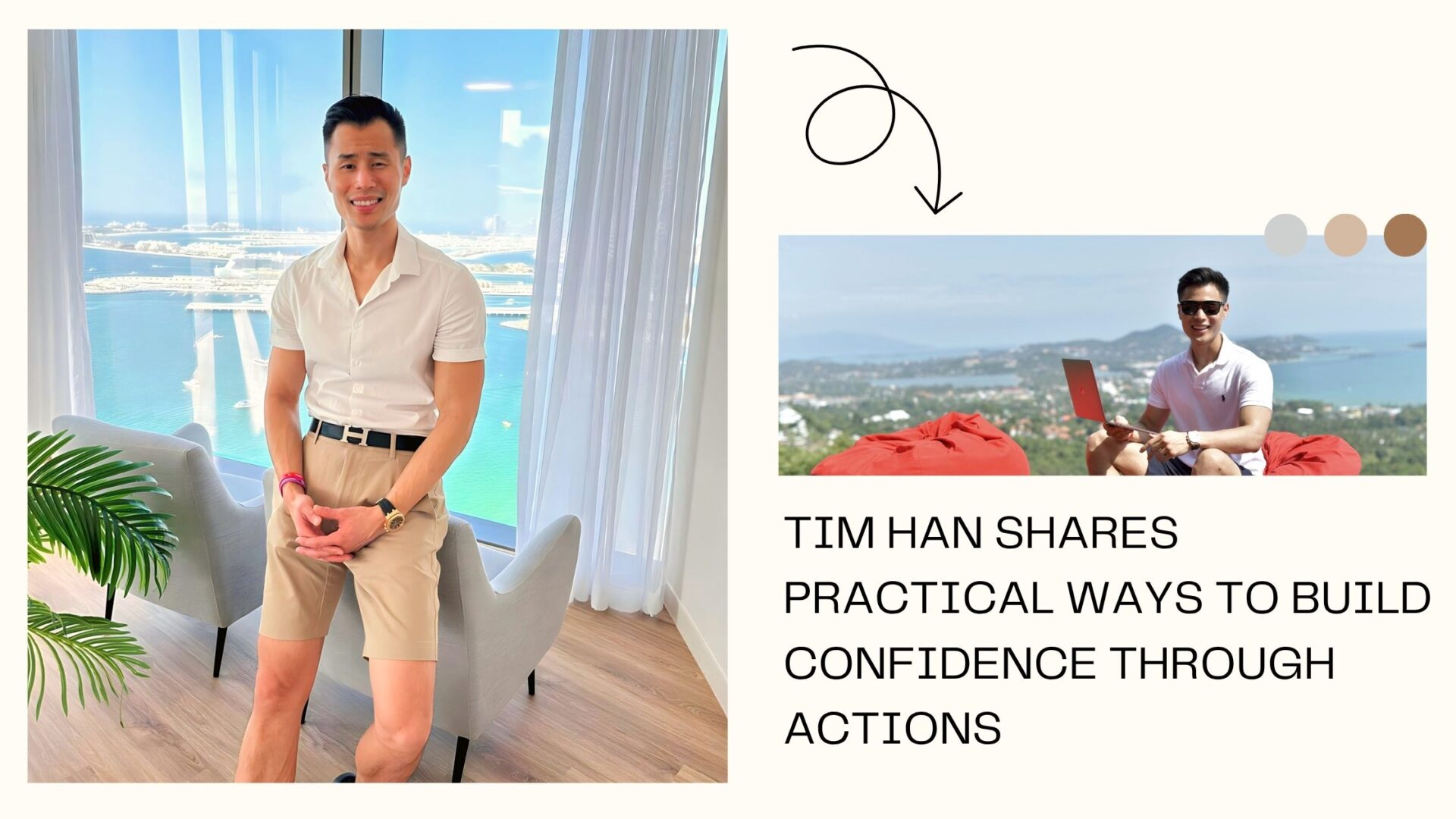
Tim Han Shares Practical Ways to Build Confidence Through Actions
Confidence is not always something people naturally possess. For many, it develops gradually through experience, preparation, and the willingness to take action despite uncertainty. Learning how to build confidence can help you approach challenges, communicate more effectively, and pursue personal and professional goals with greater clarity.
Tim Han, founder of Success Insider, explores personal development topics that include overcoming limiting beliefs, strengthening self-belief, and taking purposeful action. His work offers a useful starting point for understanding how everyday decisions can influence the way we approach challenges and personal growth.
Rather than waiting until you feel completely ready, you can begin developing confidence by taking small, manageable steps toward the things that matter to you. Here are practical strategies to help you get started.
Understanding the Connection Between Confidence and Action
Self-confidence is your belief in your ability to handle situations, make decisions, and learn from experience. It does not mean knowing everything or never feeling nervous. Instead, confidence can involve trusting yourself to respond, adapt, and improve when difficulties arise.
Consider someone who wants to speak confidently during meetings. Waiting until all nervousness disappears may prevent that person from gaining valuable experience. Preparing a few points, contributing one idea, and gradually participating more often can create opportunities to develop communication skills.
Action gives you experience, and experience can help you understand your strengths and areas for improvement. Over time, this process can make unfamiliar situations feel more manageable.
1. Challenge the Limiting Beliefs Holding You Back
Limiting beliefs are assumptions that restrict what you believe you can accomplish. Thoughts such as “I am not good enough,” “I always make mistakes,” or “I cannot succeed at this” can discourage you from trying.
The first step is to recognize these thoughts without automatically treating them as facts.
Ask yourself three questions:
- What evidence supports this belief?
- Is there another way to interpret the situation?
- What small action could help me test this assumption?
For example, if you believe you are not capable of learning a new skill, try practicing it for a short period each day. Track what improves instead of judging your ability based on your first attempt.
Changing a limiting belief does not require pretending that every challenge is easy. It means giving yourself a fair opportunity to learn before deciding what you can achieve.
2. Take Small Steps Outside Your Comfort Zone
You do not have to make dramatic changes to develop confidence. Small challenges can help you practice responding to situations that previously made you uncomfortable.
Start with an action that feels challenging but manageable. If you find networking difficult, begin by introducing yourself to one new person. If you want to become a better writer, publish a short piece or ask someone for constructive feedback.
Once you become comfortable with that step, gradually increase the challenge.
This approach allows you to build experience without overwhelming yourself. It also helps you recognize that discomfort does not automatically mean you are incapable.
The goal is not to eliminate every uncomfortable feeling. It is to learn that you can often take meaningful action while uncertainty is still present.
3. Build Self Discipline Through Consistent Habits
Confidence can be supported by following through on commitments you make to yourself. When you repeatedly complete manageable tasks, you create evidence that you can act on your intentions.
Start by choosing one realistic daily commitment. You might spend fifteen minutes learning a new skill, exercise according to your abilities, or complete your most important task before checking social media.
Make the commitment specific and achievable. A plan such as “I will practice public speaking for ten minutes after lunch” is easier to follow than a vague intention to become more confident.
If you miss a day, review what prevented you from following through and adjust your plan. Avoid turning one missed commitment into a reason to abandon the entire routine.
Success Insider has also published guidance on building self-discipline and staying committed, making consistent action a relevant theme for readers exploring personal growth.
4. Stop Comparing Your Journey With Others
Constant comparison can make you overlook your own progress. You may compare your early efforts with another person’s years of experience, or measure your success against goals that do not reflect your priorities.
Instead, evaluate your progress against your previous performance.
Ask yourself whether you have learned something new, handled a challenge more effectively, or become more consistent in an important area of life.
For example, an aspiring entrepreneur might feel discouraged when comparing a new business with an established company. A more constructive approach is to focus on improving customer communication, understanding the market, and developing a sustainable business plan.
Other people’s achievements can provide inspiration, but your own goals, circumstances, and progress deserve attention too.
5. Learn to Accept Mistakes Without Losing Self Belief
Mistakes are part of learning. A poor presentation, an unsuccessful project, or an uncomfortable conversation does not define your overall ability.
Instead of treating a setback as proof that you cannot succeed, examine what happened and identify what you can change.
Use a simple review process:
- Identify the situation and the result you wanted.
- Recognize what went well and what needs improvement.
- Decide what you can do differently next time.
- Apply that lesson to your next attempt.
For example, if a job interview does not lead to an offer, you could review your preparation, practice answering questions, and ask for feedback when appropriate.
This does not mean every setback is entirely within your control. Circumstances, timing, and other people’s decisions also matter. The purpose is to identify useful lessons without unfairly blaming yourself.
6. Prepare Before Facing Important Challenges
Confidence is not only about mindset. Preparation can also help you feel more capable when facing an unfamiliar or demanding situation.
Before a presentation, organize your main points and rehearse. Before a difficult conversation, clarify what you want to communicate. Before launching a business project, research your audience and identify potential risks.
Preparation reduces avoidable uncertainty and helps you respond more thoughtfully when circumstances change.
However, avoid using preparation as an excuse to delay action indefinitely. You do not need to anticipate every possible problem before beginning. Prepare for the most important factors, take the next step, and learn as you go.
7. Develop a More Constructive Inner Dialogue
The way you speak to yourself can influence how you respond to challenges. Harsh self-criticism may make mistakes feel like personal failures, while realistic and constructive self-talk can help you focus on solutions.
Replace statements such as “I cannot do anything right” with more specific observations, such as “This attempt did not go as planned, so I need to improve my preparation.”
The second statement acknowledges the problem without turning it into a judgment about your entire identity.
You can also remind yourself of previous challenges you have handled successfully. Use those experiences as evidence of your ability to learn and adapt, not as a guarantee that every future attempt will succeed.
Constructive self-talk is not about ignoring difficult emotions. It is about responding to them with honesty, perspective, and patience.
How to Build Confidence in Your Personal and Professional Life
Confidence can be developed differently depending on your goals and circumstances.
At work: Prepare for meetings, ask questions when necessary, and volunteer for tasks that help you develop relevant skills.
In business: Research decisions carefully, communicate clearly with customers, and treat feedback as information that can improve your approach.
In relationships: Express your needs respectfully, listen to others, and establish appropriate boundaries.
In personal development: Choose meaningful goals, practice consistently, and acknowledge progress without expecting perfection.
For example, someone who wants to become a more effective leader might begin by listening more carefully during team discussions. They could then practice giving clearer instructions, requesting feedback, and addressing problems constructively.
Confidence grows through a combination of experience, learning, preparation, and realistic self-assessment. It is not a substitute for knowledge or careful decision-making.
A Simple Seven Day Confidence Building Challenge
You can start applying these ideas with one small action each day.
- Day 1: Identify one limiting belief and question the evidence behind it.
- Day 2: Complete a task you have been postponing.
- Day 3: Practice a skill that supports an important goal.
- Day 4: Ask for constructive feedback from someone you trust.
- Day 5: Try one manageable activity outside your usual routine.
- Day 6: Review a past mistake and identify one lesson.
- Day 7: Reflect on your progress and choose a habit to continue.
Adapt these activities to your own needs. The challenge is not a scientific test or a guarantee of rapid change. It is a practical way to begin turning personal development ideas into everyday behavior.
Frequently Asked Questions
How can I build confidence when I feel nervous?
Start with a manageable action, prepare for the situation, and focus on what you want to accomplish rather than trying to eliminate all nervousness. Repeated experience can help you become more comfortable over time.
What is the difference between confidence and arrogance?
Confidence involves recognizing your abilities while remaining open to learning and feedback. Arrogance often involves exaggerating your abilities or dismissing other people’s contributions.
Can daily habits improve self-confidence?
Daily habits can support confidence by helping you practice skills, follow through on commitments, and recognize progress. Choose realistic habits that match your goals and circumstances.
How does Tim Han relate to personal development?
Tim Han is an entrepreneur, author, international speaker, and founder of Success Insider. The platform covers personal growth topics such as self-belief, confidence, productivity, and overcoming limiting beliefs.
What should I do when I lose confidence after a failure?
Give yourself time to process the experience, identify what was within your control, and determine what you can learn. Set a realistic next step instead of using one disappointing result to judge your entire potential.
Conclusion
Building confidence is a process of learning to trust your ability to prepare, take action, respond to difficulties, and improve through experience. You do not need to wait until every doubt disappears before you begin pursuing meaningful goals.
The personal development themes explored by Tim Han and Success Insider provide a useful starting point for thinking about self-belief, discipline, and purposeful action. The most important step is to apply what you learn in ways that fit your own circumstances.
Start with one small commitment today. Challenge one limiting belief, practice one useful skill, or take one step you have been postponing. Review the outcome, learn from the experience, and decide what to do next.
For more ideas about personal growth, confidence, and self-improvement, explore the educational articles and resources available at Success Insider.
