

The Role of Molybdenum in 316 and 317L Stainless Steel Pipes
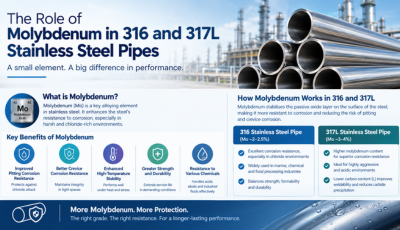
Molybdenum serves as a crucial alloying element in austenitic stainless grades. The addition of this element fundamentally alters the material performance in harsh conditions. Its presence in stainless steel 317L pipe improves resistance to localised corrosion mechanisms. Engineers must understand how molybdenum behaves to select the correct material for industrial setups. Higher chloride concentrations can increase the risk of pitting and crevice corrosion, while molybdenum improves resistance to these localised corrosion mechanisms. Knowing these specific properties assists procurement managers in specifying the right grade for processing facilities. Selecting the proper stainless steel 316 pipe requires this fundamental metallurgical knowledge.
What Is the Role of Molybdenum in Stainless Steel?
Molybdenum is a metallic alloying element added to specific steel grades. This element significantly changes the fundamental performance of the base material. The addition provides a direct improvement in localized corrosion resistance across varied applications. Metals facing harsh chloride-containing environments need this element to withstand pitting and crevice corrosion. Industrial processing facilities rely on these modified alloys to maintain structural integrity. The element stabilises the passive oxide layer on the metal surface.
Molybdenum in 316 Stainless Steel Pipes
The presence of molybdenum defines the baseline properties of the 316 grade. This specific addition provides better pitting and crevice corrosion resistance than standard 304 stainless steel. The material performs well under moderate chloride exposure. Marine environments frequently utilize this grade for structural and fluid transport requirements. Chemical processing plants and food production facilities specify this material for sanitary piping. The molybdenum content extends the service life of these components significantly.
Molybdenum in 317L Stainless Steel Pipes
A higher molybdenum concentration separates 317L from the standard 316 grade. This elevated content delivers enhanced resistance to aggressive chemicals and industrial acids. The alloy shows superior localised corrosion resistance under severe conditions. The low-carbon characteristics of 317L prevent sensitization during welding procedures. Facilities operating under severe corrosive conditions depend on this specific material specification. The extra molybdenum handles demanding process environments where lower grades fail rapidly. Top stainless steel 317L pipe manufacturers emphasise these properties.
316 vs 317L Stainless Steel Pipes: How Molybdenum Makes a Difference
Molybdenum concentration defines the performance limits of 316 and 317L stainless steel pipes. This percentage dictates how the metal handles chlorides and acids. Engineers evaluate these specific parameters to specify the correct grade. Grade 317L manages aggressive process lines. Grade 316 handles standard chemical applications.
| Parameter | 316 Stainless Steel | 317L Stainless Steel |
| Molybdenum content | 2.0–3.0% Mo. | 3.0–4.0% Mo. |
| Pitting resistance | Good; PREN is ~24. | Better; PREN is ~28–30. |
| Crevice corrosion resistance | Moderate to good in mild chlorides. | Stronger in aggressive chloride service. |
| Chemical resistance | Good in many acids and organics. | Superior in reducing acids and harsh chemicals. |
| Chloride exposure | Suitable for moderate chloride levels. | Preferred for higher chlorides and temperatures. |
| Strength and durability | Good mechanical properties and weldability. | Slightly higher strength and creep resistance. |
| Welding considerations | Easy to weld with standard fillers. | Also weldable; may need matching high-Mo filler. |
| Operating environments | Marine, food, chemical, general industry. | Severe chemical, pulp/paper, offshore, and acid service. |
| Typical applications | Tanks, piping, exchangers, fittings. | Aggressive process lines, acid plants, and desalination. |
Applications of 316 and 317L Stainless Steel Pipes
These piping materials support various industrial processes. Below are common areas where both grades operate effectively.
Chemical processing
Piping systems in chemical plants move highly reactive acids. The molybdenum stabilizes the steel against aggressive solvents. This addition keeps the pipe walls intact during continuous production cycles without rapid material degradation.
Petrochemical industry
Refineries process crude oil containing high sulphur and chloride levels. The alloyed pipes handle hot hydrocarbon streams safely. The molybdenum prevents the internal surfaces from deteriorating under high temperature and elevated pressure.
Marine applications
Saltwater environments degrade standard metals very quickly. The added alloy protects the external pipe surfaces from atmospheric salt spray. This protection keeps structural components and fluid lines secure on offshore platforms.
Pharmaceutical processing
Drug manufacturing demands exceptionally clean internal piping surfaces. The alloy stops cleaning chemicals from damaging the pipe wall. This preserves the internal finish and prevents contamination of the final medical product.
Food processing
Industrial food production uses strong alkaline cleaners daily. The enhanced material withstands these daily washdowns without pitting. The element ensures the piping systems meet strict sanitary requirements for commercial food facilities.
Pulp and paper industry
Paper production involves harsh bleaching chemicals and hot acids. The extra alloy content in the material resists the corrosive liquors. The pipes maintain their structural integrity through continuous chemical processing stages.
Textile processing
Fabric manufacturing uses strong dyes and bleaching agents. The metal withstands the acidic dye baths without altering the fluid chemistry. This preserves both the equipment and the quality of the processed textiles.
Pollution control equipment
Flue gas desulfurization systems handle extremely acidic exhaust mixtures. The material withstands the condensing acids inside the scrubber units. The high alloy content prevents localized failure in these harsh environmental applications.
Water treatment
Desalination plants process water with heavy salt concentrations. The modified steel handles the reverse osmosis pressures and the high chlorides. The pipes transport the brine safely without developing leaks over time.
Industrial process piping
Manufacturing plants require reliable fluid transport for cooling and heating. The alloy handles fluctuating temperatures and mixed water chemistries. The material delivers consistent performance across basic plant utility systems and general infrastructure.
Factors to Consider When Selecting 316 or 317L Stainless Steel Pipes
Engineers must evaluate several technical parameters before finalizing a material choice. Review the specific system demands to ensure the selected grade performs as expected.
- Determine the exact chloride concentration in the fluid stream to assess pitting risks.
- Analyze all chemical exposure levels, including cleaning agents and byproducts.
- Verify the maximum operating temperature the piping system will experience.
- Calculate the internal pressure conditions to select the correct pipe schedule.
- Evaluate the general corrosion severity of the surrounding atmospheric environment.
- Check the full fluid composition for trace elements that accelerate wear.
- Review the welding requirements for field installation and shop fabrication.
- Confirm the required pipe dimensions are available in the selected grade.
- Ensure the material meets the applicable ASTM and ASME manufacturing standards.
- Define the required service life for the industrial processing facility.
Common Mistakes to Avoid When Selecting 316 and 317L Pipes
Procurement teams sometimes make critical errors during the specification process. Avoiding these typical material selection mistakes prevents structural failures and costly unplanned facility downtime.
- Choosing a pipe grade based only on the initial material cost.
- Ignoring intermittent chloride exposure during routine equipment maintenance cycles.
- Underestimating the actual corrosion conditions present in the local environment.
- Selecting the standard 316 grade when the process requires higher corrosion resistance.
- Overlooking the importance of the specific molybdenum percentage in the alloy.
- Ignoring the specific welding requirements needed to maintain joint integrity.
- Purchasing process pipes without requesting proper material test certification documents.
Conclusion
Molybdenum fundamentally improves the corrosion resistance and operational reliability of 316 and 317L stainless steel pipes. The 317L grade, with its higher alloy content, proves advantageous for highly aggressive industrial environments. Standard 316 remains a widely adopted option for standard corrosion-resistant applications. Buyers must select the appropriate grade based strictly on actual process conditions. Sourcing certified materials from a reliable manufacturer guarantees the piping system will function correctly under pressure.
