

Glass Standoffs vs. Spigots: Which Support System Should You Choose?
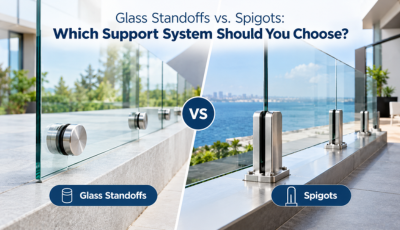
Glass railing systems function as architectural borders for balconies, staircases, terraces, decks, and other elevated spaces. The structural integrity of these panels relies entirely on the mounting hardware. The support system determines glass stability, safety, appearance, and installation requirements. Contractors evaluate different base systems before ordering materials. Engineers calculate the exact stress points based on the selected hardware. Poorly specified supports result in structural failure over time. Glass Standoffs and spigots are two commonly considered support options for these barriers. The right choice depends on glass configuration, installation location, design requirements, and structural needs. Fixing methods alter how the glass behaves under wind load or physical impact. The underlying substrate determines which mounting system is mechanically possible.
What are Standoff Systems?
Standoffs are cylindrical mechanical fasteners. They secure glass panels using fixed-point connections. Installers drill holes through the glass panels during fabrication. A threaded rod or bolt passes through these holes and anchors directly into the structural fascia or wall. A cap secures the glass against the standoff base.
Their role in creating a clean and minimal appearance is recognized in commercial construction. The hardware remains mostly hidden from the interior view.
Common materials include 304 stainless steel, 316 marine-grade stainless steel, and machined aluminum. Finishes are typically brushed satin, mirror-polished, or powder-coated matte black.
Their use in frameless glass railing systems is standard practice for side-mounted applications. Using glass railing standoffs allows the glass to drop below the floor line. This covers the edge of the concrete slab or wooden joist completely.
What are Glass Spigots?
Glass spigots are heavy-duty metal clamps installed at the floor level. They support glass panels from the base. The hardware bolts onto the top surface of the deck or concrete slab. The glass panel slots directly into the top of the spigot.
Their typical installation arrangement requires two spigots for a standard one-meter glass panel. The installer does not drill holes in the glass. The spigot housing contains internal pressure plates. Tightening the grub screws compresses these plates against the glass.
They share compatibility with different glass railing configurations, including pool fencing and wind blocks.
Spigots provide stability while maintaining an open visual appearance. The hardware measures roughly 160mm in height. The rest of the glass remains unobstructed.
Standoffs vs Spigots: Key Differences
The mechanics of these two systems differ based on physical load paths.
- Installation method: Standoff systems require precise hole mapping in the glass before tempering. Spigot systems clamp onto solid glass panels.
- Point-fixed vs base-supported design: Standoffs suspend the glass vertically using side pressure. Spigots carry the dead weight of the glass at the bottom edge.
- Glass panel positioning: Standoffs sit against the vertical face of the structure. Spigots sit on the horizontal surface of the floor.
- Structural support: Standoff configurations distribute bending moments across the bolt locations. Spigot configurations transfer leverage directly into the floor plate.
- Visual appearance: Standoff hardware is visible from the outside of the building. Spigot hardware is visible on the floor level.
- Space requirements: Fascia mounting keeps the floor area clear. Base mounting takes up a physical footprint on the deck.
- Installation flexibility: Spigots allow lateral adjustment during installation. Standoffs demand exact tolerance because holes cannot be modified.
- Maintenance access: Standoff mounts leave a small gap requiring special cleaning tools. Spigots sit at ground level.
- Suitability for different railing layouts: Standoff layouts fit straight structural beams. Spigot layouts fit flat concrete pads.
Each system affects the overall appearance and functionality of a glass railing differently depending on the mounting orientation.
Where are Standoffs Commonly Used?
These side-mounted fixtures secure glass in specific architectural layouts.
- Balconies
- Staircases
- Terraces
- Decks
- Commercial buildings
- Hotels and restaurants
- Residential interiors
- Offices and public spaces
Standoffs are selected for applications where a clean, modern, and visually light railing system is desired. Maximising usable floor space dictates this choice. Narrow residential staircases benefit from side-mounted glass. Commercial atriums use this method to hide exposed concrete floor edges effectively.
Where are Glass Spigots Commonly Used?
Base clamps suit different environmental conditions and horizontal substrates.
- Pool surrounds
- Balconies
- Terraces
- Gardens and outdoor areas
- Staircases
- Commercial properties
- Hospitality spaces
- Outdoor glass barriers
Base-mounted spigots can be practical for specific floor and outdoor railing configurations. Pool fencing requires ground-level securing to prevent water pooling. Spigots elevate the glass slightly above the ground, allowing water and debris to pass underneath.
Factors to Consider When Choosing Between Standoffs and Spigots
Contractors evaluate site conditions before selecting hardware.
- Glass type and thickness: Spigots accommodate 12mm to 17.52mm glass. Standoff pins require specific thread lengths based on glass thickness.
- Railing height: Taller privacy screens exert massive leverage on base spigots.
- Installation surface: Concrete slabs accept heavy-duty anchor bolts for spigots. Hollow wooden fascias struggle to support standoff bolts without blocking.
- Structural requirements: The substrate must handle the tension loads generated by wind.
- Indoor or outdoor location: Coastal environments influence 316-grade stainless steel.
- Available installation space: Narrow balconies cannot afford to lose floor space to base clamps.
- Wind and environmental exposure: High wind zones require closer hardware spacing.
- Desired appearance: Hardware visibility changes based on the exterior viewing angle.
- Maintenance requirements: Exterior standoff threads collect dirt if unsealed.
- Applicable safety and building standards: Inspectors check embedment depths for all anchors.
- Project budget: Hole fabrication increases glass panel costs.
Keep the comparison practical and focused on project requirements. The building frame limits the available options.
Common Mistakes to Avoid When Selecting Glass Railing Supports
Many projects encounter issues due to incorrect hardware specification.
- Choosing a support system based only on appearance.
- Ignoring glass specifications and panel weight calculations.
- Selecting incompatible fittings for the substrate material.
- Overlooking the installation surface thickness and edge distance.
- Failing to consider environmental exposure and salt spray.
- Ignoring structural and safety requirements dictated by local codes.
- Using low-quality hardware that strips during tightening.
- Not considering professional installation requirements and heavy lifting equipment.
- Purchasing low-grade glass railing standoffs that rust quickly in exterior environments.
Conclusion
Glass Standoffs require side-mounting and pre-drilled glass panels. Spigots rely on base-mounting and friction clamps without glass holes. The right choice depends on the glass design, installation conditions, safety requirements, aesthetics, and project needs. Contractors must assess the building structure before ordering hardware. Proper site evaluation determines which system will securely hold the glass panels under physical load. Correct specification prevents structural failures.
